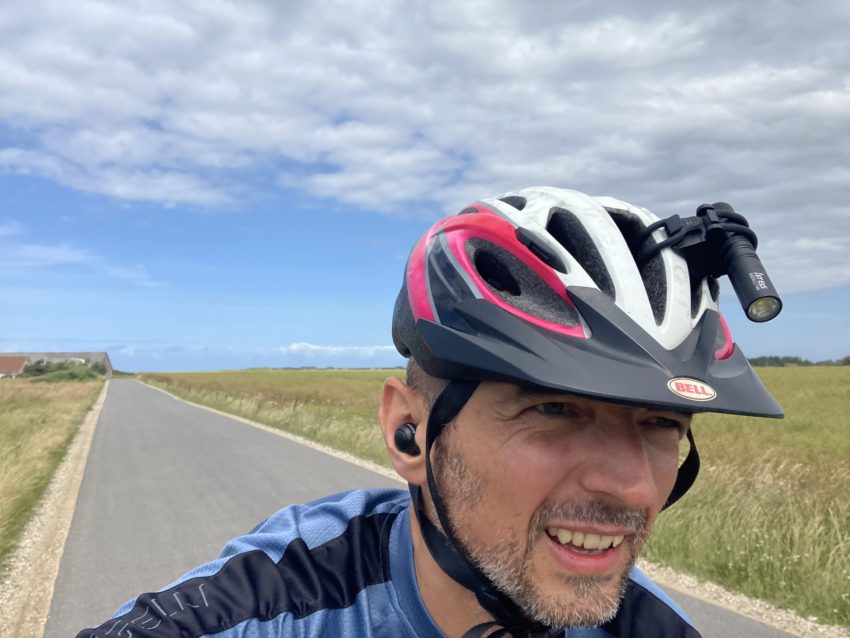
W nocy padało jeszcze dwa razy. Na szczęście wiata, pod którą zaparkowałem ma ścianę szczytową chronioną przez dość głęboki dach, więc Kolubryna i sakwy nie zmokły. Ale jeśli spaliście kiedyś w namiocie to wiecie co oznacza kapanie na tropiku. Zatyczki do uszu pomagają nie słyszeć kapania, ale pomagają też nie słyszeć budzika. Kiedy byłem na Wyspach Alandzkich tak dobrze mi się spało do 9, podczas gdy plan zakładał, że ruszam o 6. W każdym razie dziś nie używałem zatyczek, tak że wyjeżdżałem trochę zaspany, ale przynajmniej zgodnie z planem.
En: It rained twice more during the night. Fortunately, the shelter where I parked has a gable wall protected by a fairly deep roof, so Kolubryna and the panniers stayed dry. But if you’ve ever slept in a tent, you know what dripping on the rainfly means. Earplugs help you not hear the dripping, but they also help you not hear the alarm clock. When I was on the Åland Islands, I slept so well until 9, while the plan was to leave at 6. In any case, I didn’t use earplugs today, so I left a bit sleepy but at least on schedule.
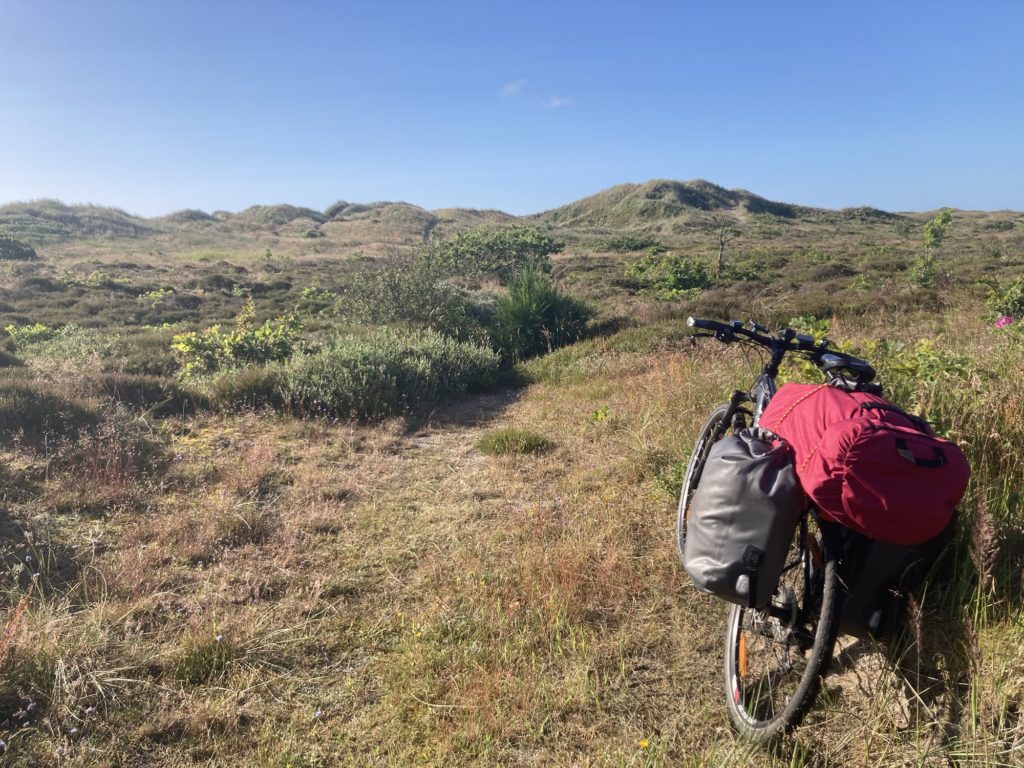
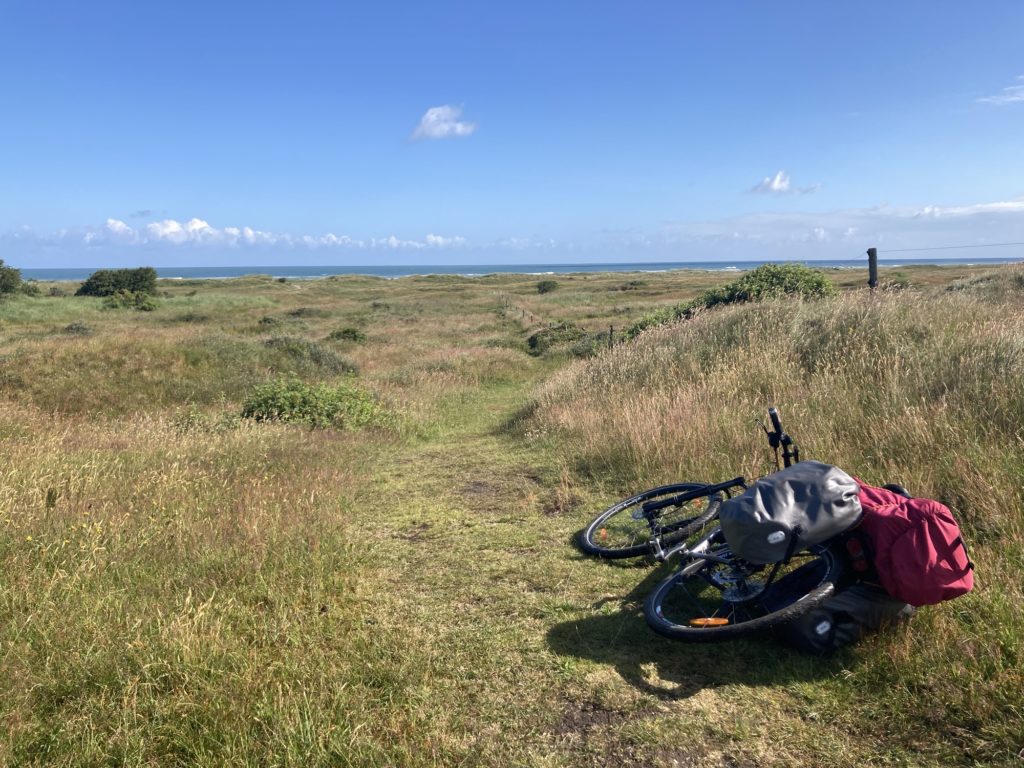
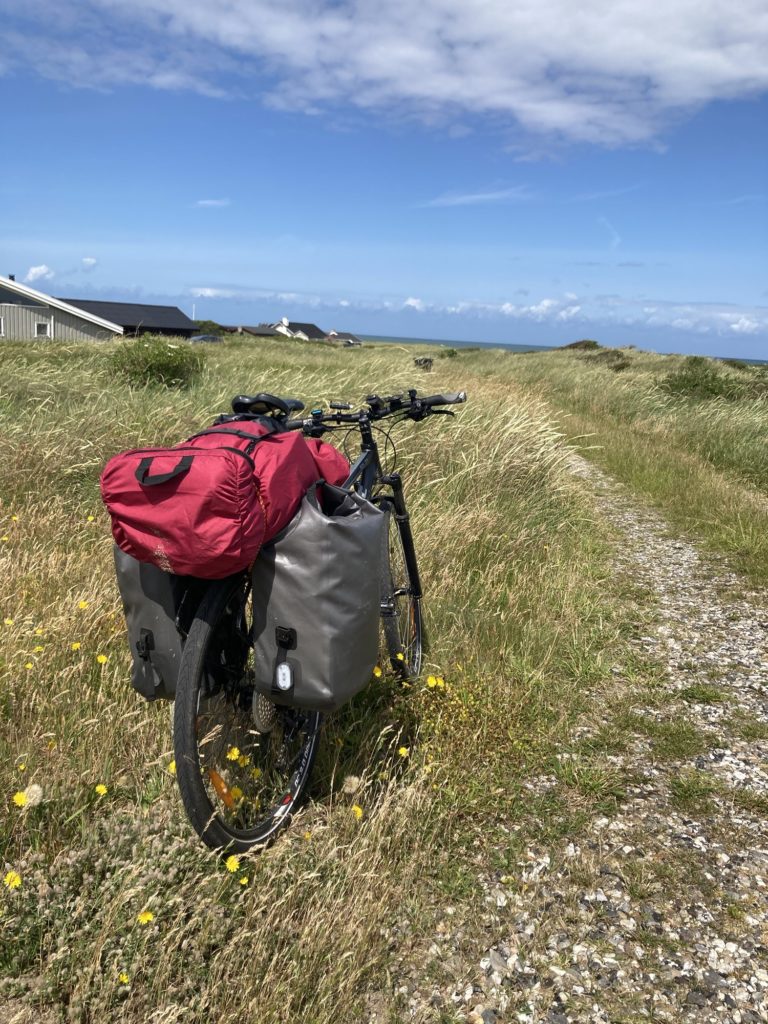
Pogoda z samego rana dopisywała. Wczoraj nie zdecydowałem się obejrzeć z bliska wydm, bo było na nich sporo ludzi, a liczyłem że na kolejnych punktach będzie mniej osób. Ale nie było kolejnych punktów. Tak że dziś, ponieważ wracałem tą samą trasą, zatrzymałem się w tamtym miejscu, żeby trochę połazić.
En: The weather was great early in the morning. Yesterday, I decided not to take a close look at the dunes because there were a lot of people on them, and I was hoping there would be fewer people at other spots. But there weren’t any other spots. So today, since I was returning on the same route, I stopped at that place to walk around a bit.
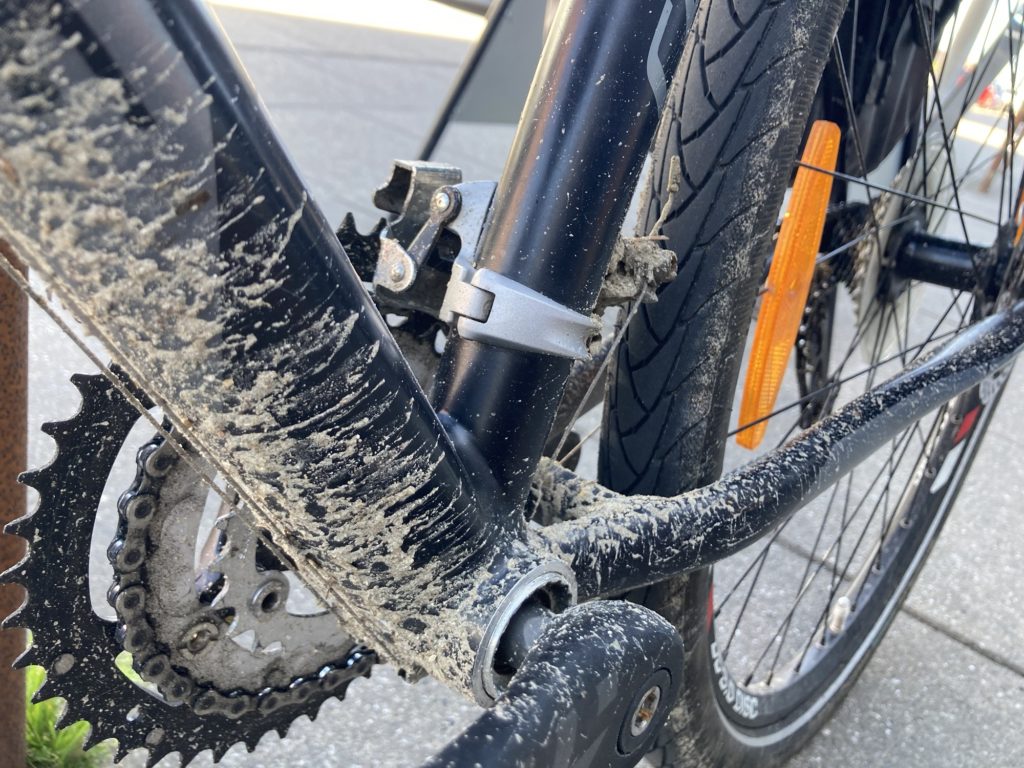
Kilka kilometrów za Skagen niebo zaciągnęło się chmurami i zaczęło padać. Deszcz w trakcie jazdy nie jest raki zły, tak długo jak nie jest przy tym zimno. A dziś nie było. Natomiast droga na dość długim odcinku wiodła lasami, dlatego Kolubryna po dzisiejszej jeździe ucieszyłaby się z mycia. Ale będzie musiała jeszcze na to poczekać, na jutro zapowiadają kolejne deszcze.
En: A few kilometers past Skagen, the sky clouded over, and it started to rain. Riding in the rain isn’t that bad as long as it’s not cold, and today it wasn’t. However, the route went through forests for a long stretch, so Kolubryna would appreciate a wash after today’s ride. But she’ll have to wait, as more rain is forecast for tomorrow.
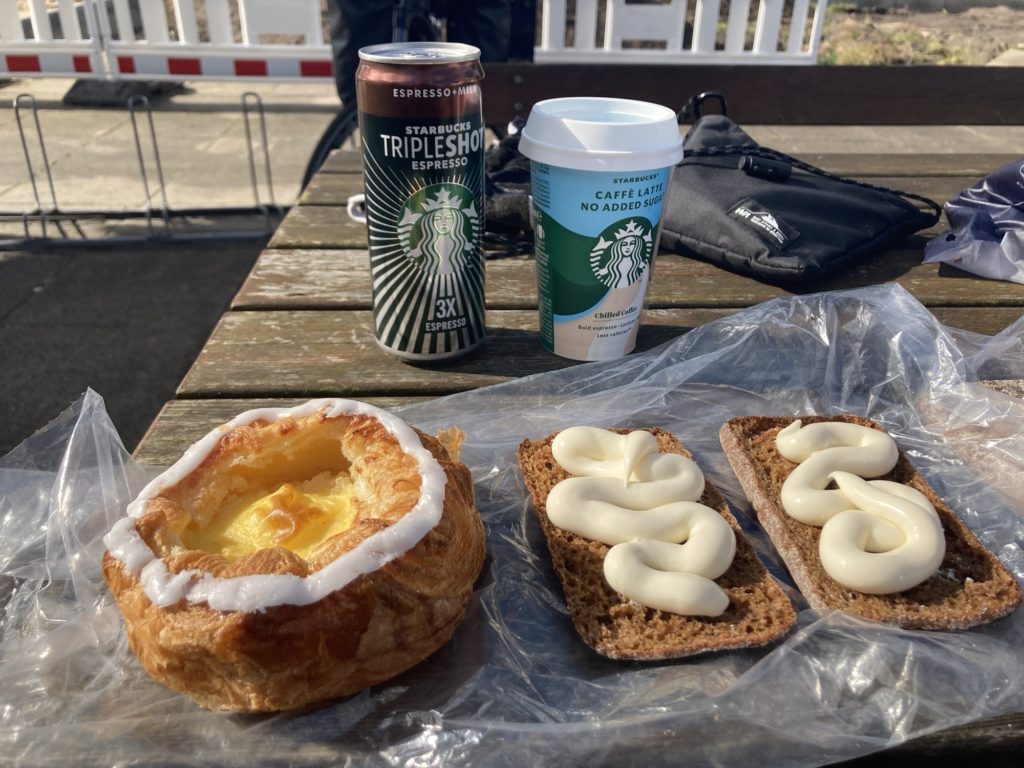
Tak jak i wczoraj po deszczu rozpogodziło się w mgnieniu oka, co pozwoliło kupić to i owo w przydrożnym sklepie i zrobić sobie królewskie śniadanie, czyli w skrócie k&k (niestety kawa z puszki, bo kawiarnie o tej porze były jeszcze nieczynne).
En: Just like yesterday, the weather cleared up in the blink of an eye after the rain, allowing me to buy a few things at a roadside store and make myself a royal breakfast, which in short is k&k (unfortunately, coffee from a can because the cafés were still closed at that hour).
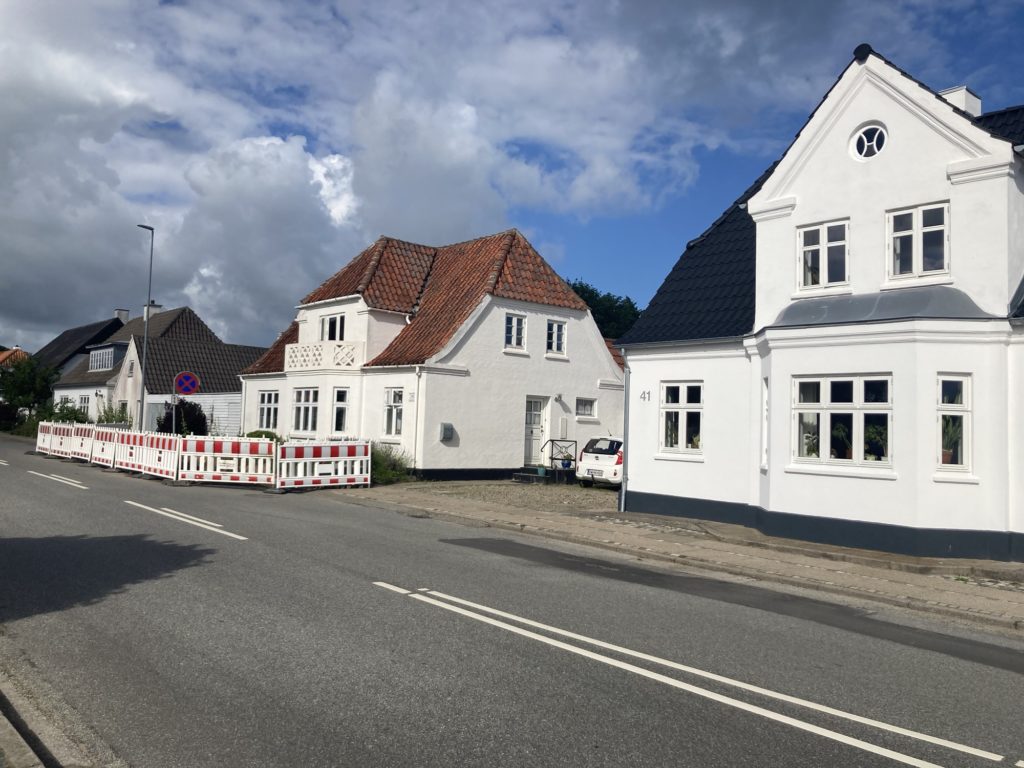
Wraz ze słońcem na niebie, zaczyna wiać. A wiecie jak to jest z wianiem. Mówi się, że co tam wiatr, byle wiało w plecy to będzie git. Niestety to tak nie działa. Wiatr nad ziemią ma to do siebie, że średnie przemieszczanie się mas powietrza może i ma jakiś kierunek zgodny z rozkładem ciśnień, ale chwilowe podmuchy są tak chaotyczne, że dostaje się je z każdej strony. A podmuch na plecy nie przyspiesza tak jak podmuch w twarz zwalnia. Tutaj wiatr jest dość silny. SMHI (szwedzki odpowiednik IMGW) podawał na dziś 36 km/h. Podmuch na twarz potrafił odebrać mi dobre 5 km/h przy jeździe z prędkością 25 km/h. Powrót z 20 do 25 km/h wymaga włożenia dodatkowej energii, po czym dostaje się kolejny podmuch. To trochę jak ze wspinaczką, gdzie trzeba wkładać dużo energii żeby pozostać na preferowanej prędkości. Dlatego zwykle w takich sytuacjach ustawiam prędkość preferowaną niżej, bo powrót z 15 do 20 kosztuje mniej niż powrót z 20 do 25 km/h.
En: With the sun in the sky, the wind starts to blow. And you know how it is with wind. People say that as long as it’s blowing at your back, it’ll be fine. Unfortunately, it doesn’t work that way. Wind near the ground has this characteristic where the average movement of air masses might have a direction aligned with the pressure distribution, but the momentary gusts are so chaotic that you get them from every side. And a gust at your back doesn’t speed you up as much as a gust in your face slows you down. Here, the wind is quite strong. SMHI (the Swedish equivalent of the Meteorological Institute) reported 36 km/h for today. A gust in the face could slow me down by a good 5 km/h when riding at 25 km/h. Getting back from 20 to 25 km/h requires putting in extra energy, only to get hit by another gust. It’s a bit like climbing, where you have to put in a lot of energy to maintain your preferred speed. That’s why in such situations, I usually set my preferred speed lower, because recovering from 15 to 20 km/h costs less than recovering from 20 to 25 km/h.
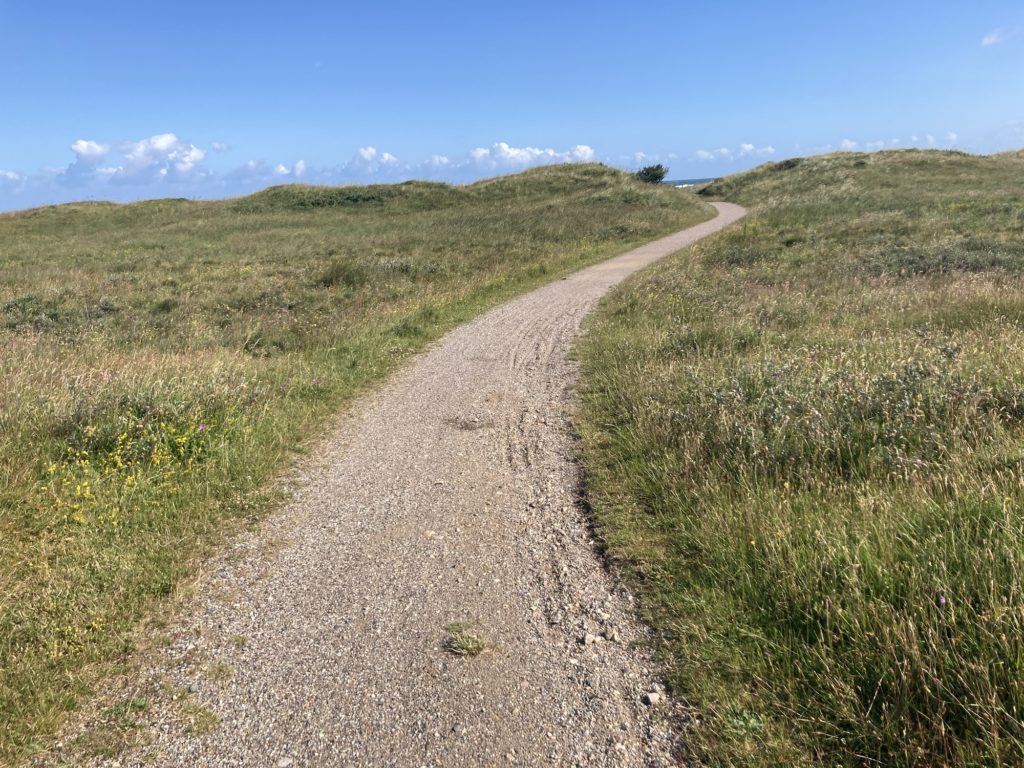
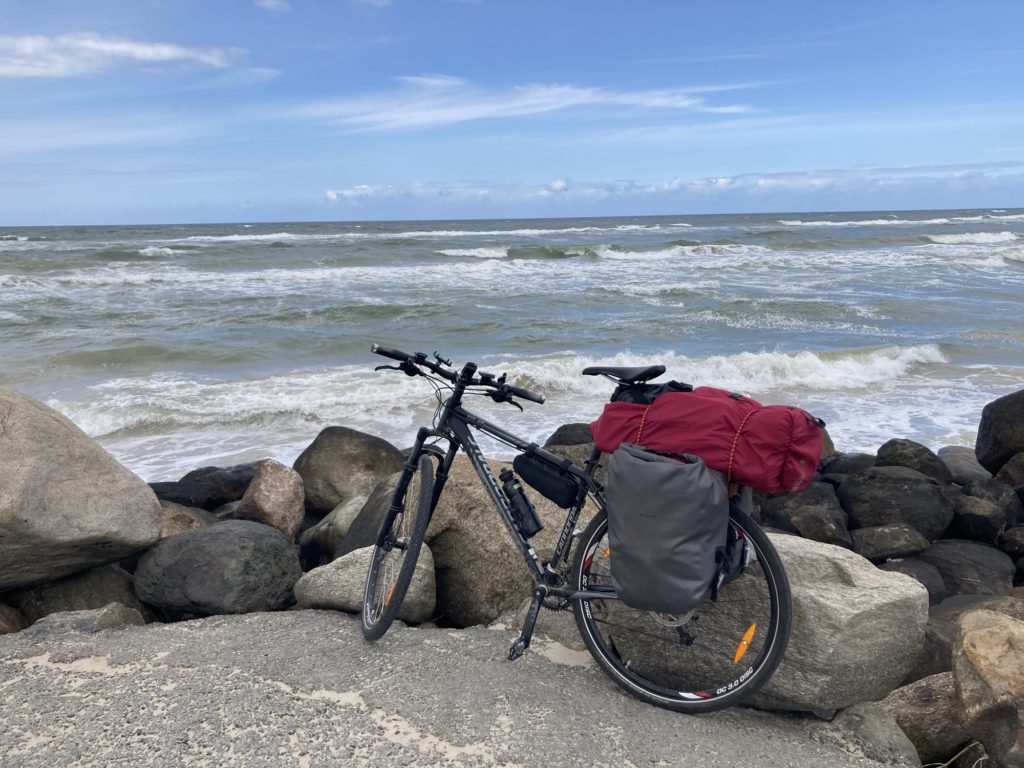
Było dziś sporo szutru, trawy i kamieni. Duża część trasy biegła nad morzem, które raz było bliżej a raz dalej drogi, którą jechałem. Co ciekawe, mimo że to zachodni brzeg Danii, to jest to wciąż Morze Bałtyckie, a konkretnie cieśnina Skagerrak (jedna z Cieśnin Duńskich, łączących Morze Bałtyckie z Morzem Północnym).
En: Today, there was a lot of gravel, grass, and stones. Much of the route ran along the sea, which was sometimes closer and sometimes farther from the road I was on. Interestingly, although this is the western coast of Denmark, it is still the Baltic Sea, specifically the Skagerrak Strait (one of the Danish Straits connecting the Baltic Sea with the North Sea).
Ciekawe jest to, że ktoś kiedyś powiedział: tu będzie cieśnina i namalował kreskę na mapie. I od tamtej pory morze w tym miejscu nie może być po prostu morzem, tylko musi być Morzem Bałtyckim, cieśniną Skagerrak. W Sztokholmie przy Slussen jest kreska, która oznacza koniec Bałtyku i początek jeziora Mälaren. Oczywiście kreska też jest tylko na mapie i zapewne są ku temu historyczne powody. Tym niemniej ciekawe jest to jak bardzo potrzebujemy jako ludzie szufladkować sobie ten świat, ułatwiając sobie pewne rzeczy, a jednocześnie utrudniając inne.
En: It’s interesting that someone once said, “Here will be a strait,” and drew a line on the map. And since then, the sea in this place can’t just be the sea; it has to be the Baltic Sea, the Skagerrak Strait. In Stockholm, by Slussen, there’s a line marking the end of the Baltic Sea and the beginning of Lake Mälaren. Of course, the line is also just on the map and there are probably historical reasons for it. Nevertheless, it’s fascinating how much we humans need to categorize this world, making some things easier while complicating others.
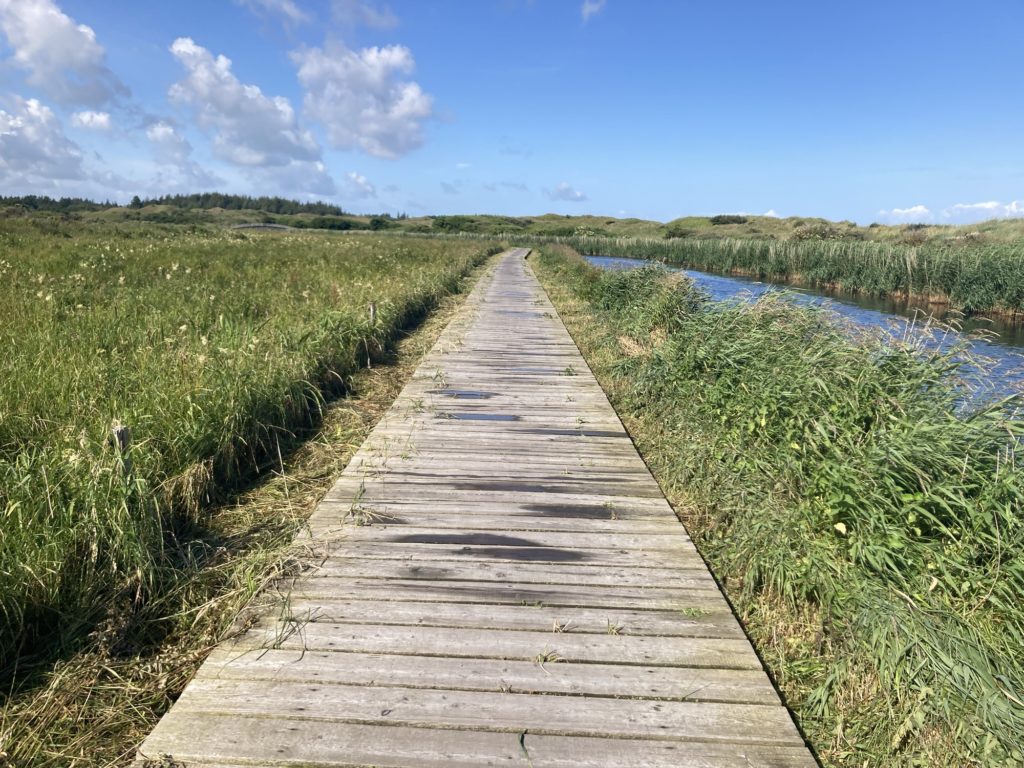
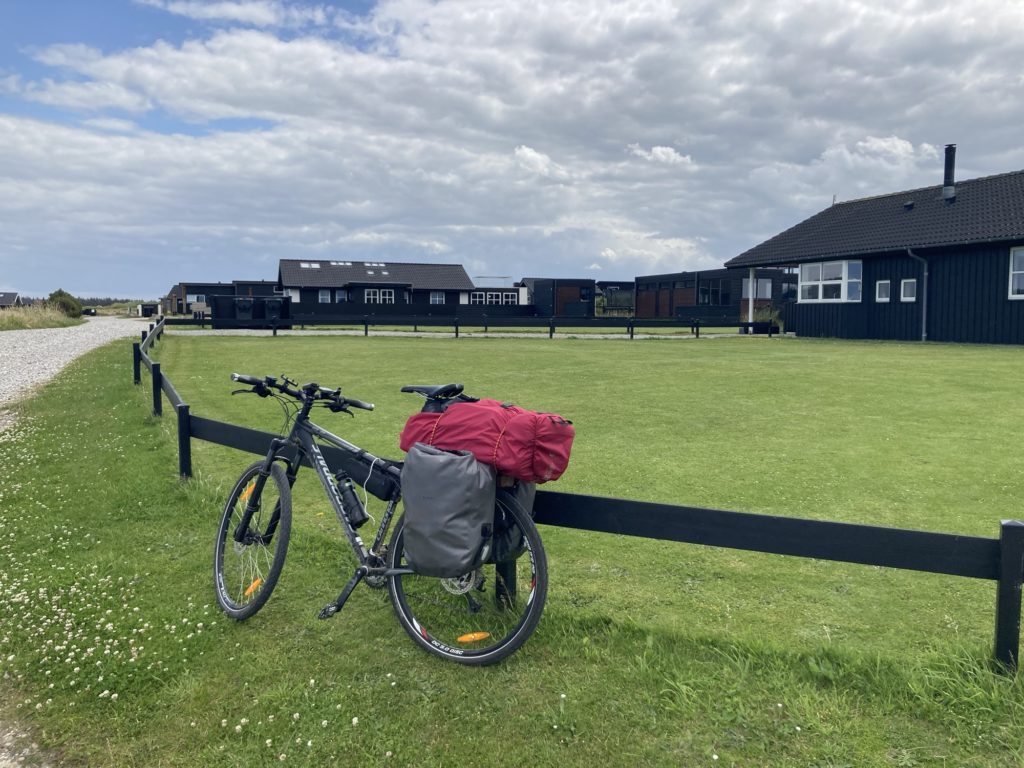
Na pewno istnieje język na świecie, w którym „Dania” oznacza „wieje”. Oczywiście w tymże języku słowo „Islandia” musi znaczyć „łeb urywa”. Co jak co, ale stopniowanie w każdym języku musi działać jak należy. Zaraz jak uwiarygodniłem sobie teorię o wietrznym języku tłumacząc co znaczy Islandia, kolejne w kolejce ustawiły się „Wyspy Owcze”. I tu chyba się poddam i schowam projekt tego języka do szuflady, bo najlepszy pomysł jaki miałem to fraza rodem z Eurobusiness: „idziesz do więzienia, nie przechodzisz przez START, nie otrzymujesz premii”.
En: There must be a language in the world where “Denmark” means “it blows.” Of course, in that language, the word “Iceland” would have to mean “it blows your head off.” After all, gradation in every language must work properly. Just as I convinced myself of the theory about the windy language by explaining what Iceland means, “Faroe Islands” lined up next. And here, I think I’ll give up and put this language project in the drawer because the best idea I had was a phrase straight out of Eurobusiness: “go to jail, do not pass GO, do not collect $200.”
Kilkanaście kilometrów przez Blokhus widzę przy drodze kościół w stylu romańskim, nie pierwszy zresztą taki na tej trasie. Zjeżdżam na parking i robię spacer wokół kościoła.
En: A few kilometers through Blokhus, I see a Romanesque-style church by the road, not the first of its kind on this route. I pull into the parking lot and take a walk around the church.
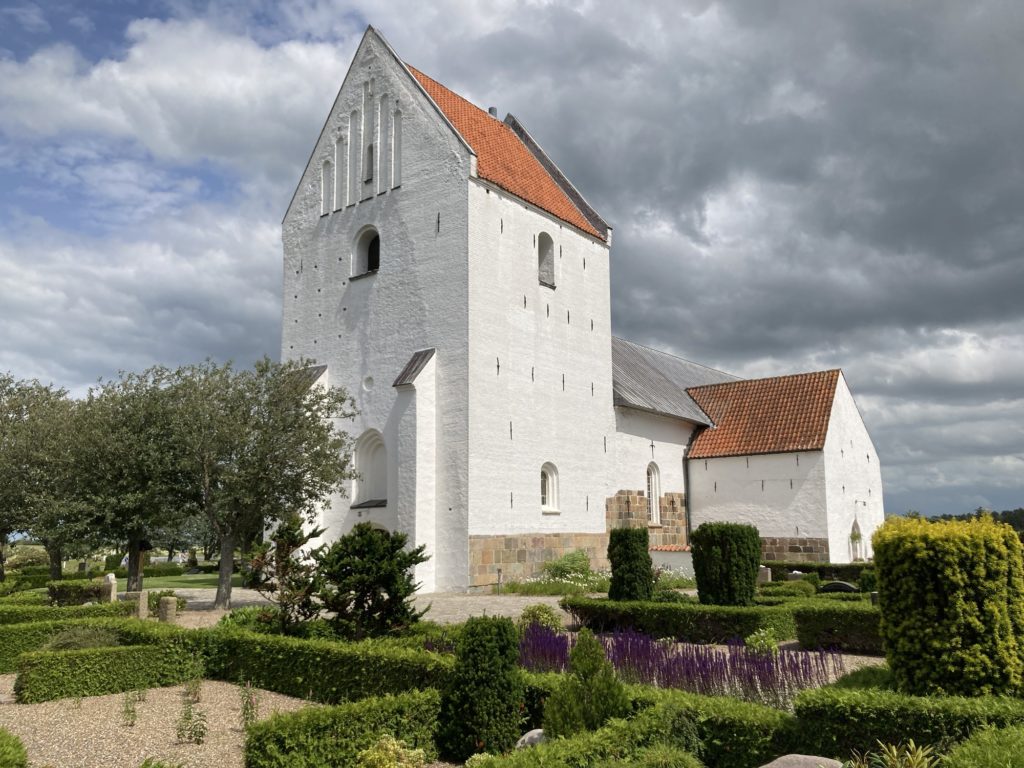
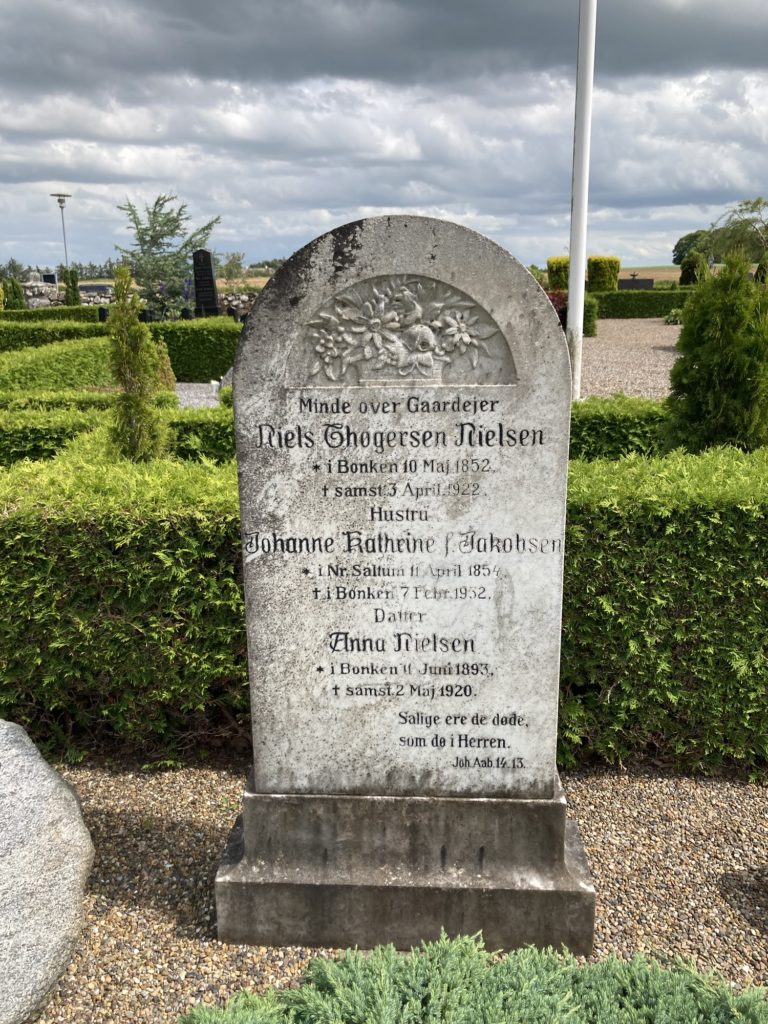
A wokół kościoła pięknie utrzymany cmentarz z historiami ludzi, którzy kiedyś tutaj żyli.
En: And around the church, there is a beautifully maintained cemetery with the stories of people who once lived here.
W końcu dojeżdżam do Blokhus i udaje mi się zjeść ciepły posiłek. Z satysfakcją stwierdzam, że w Danii pizza podawana jest pokrojona i nie trzeba sobie jej kroić samemu.
En: I finally arrive in Blokhus and manage to have a hot meal. I am pleased to note that in Denmark, pizza is served pre-sliced, so I don’t have to cut it myself.