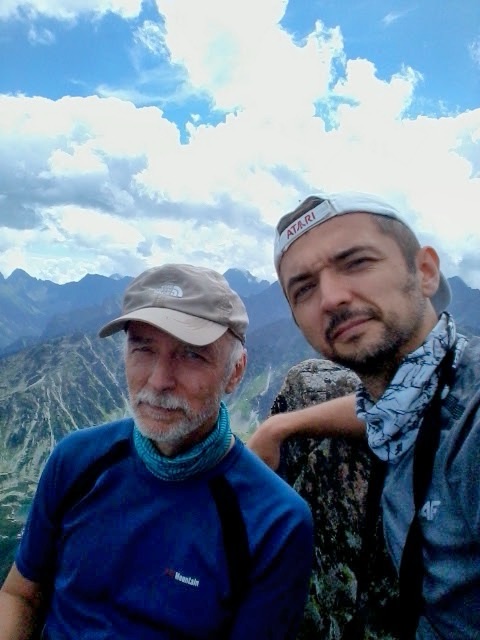
Rok temu moja wyprawa zakończyła się nieoczekiwanie w miejscowości Stenbjerg w Danii. Zdecydowałem się wrócić do Polski, kiedy dowiedziałem się o złym stanie mojego taty. Wydostanie się wtedy z Danii i szybka podróż do Polski nie byłaby możliwa, gdyby nie pomoc Kasi, która przechowała w Göteborgu mój rower i sakwy przez kilka miesięcy. Kasiu, jeszcze raz serdecznie dziękuję za pomoc!
En: A year ago, my cycling trip came to an unexpected end in the town of Stenbjerg, Denmark. I decided to return to Poland after receiving news about my dad’s poor health. Getting out of Denmark quickly and making it back to Poland wouldn’t have been possible without the help of Kasia, who kindly stored my bike and panniers in Gothenburg for several months. Kasia, once again – thank you so much for your help!
Dziś już go nie ma, zmarł w styczniu. Ale wiem, że chciał żebym ją skończył. Miał poczucie winy, że przerwałem ze względu na niego. Nie mogłem tego tak zostawić. Wyprawa w mojej głowie domagała się domknięcia.
En: He’s no longer with us he passed away in January. But I know he wanted me to finish the journey. He felt guilty that I cut it short because of him. I couldn’t leave it like that. The trip kept lingering in my mind, demanding closure.
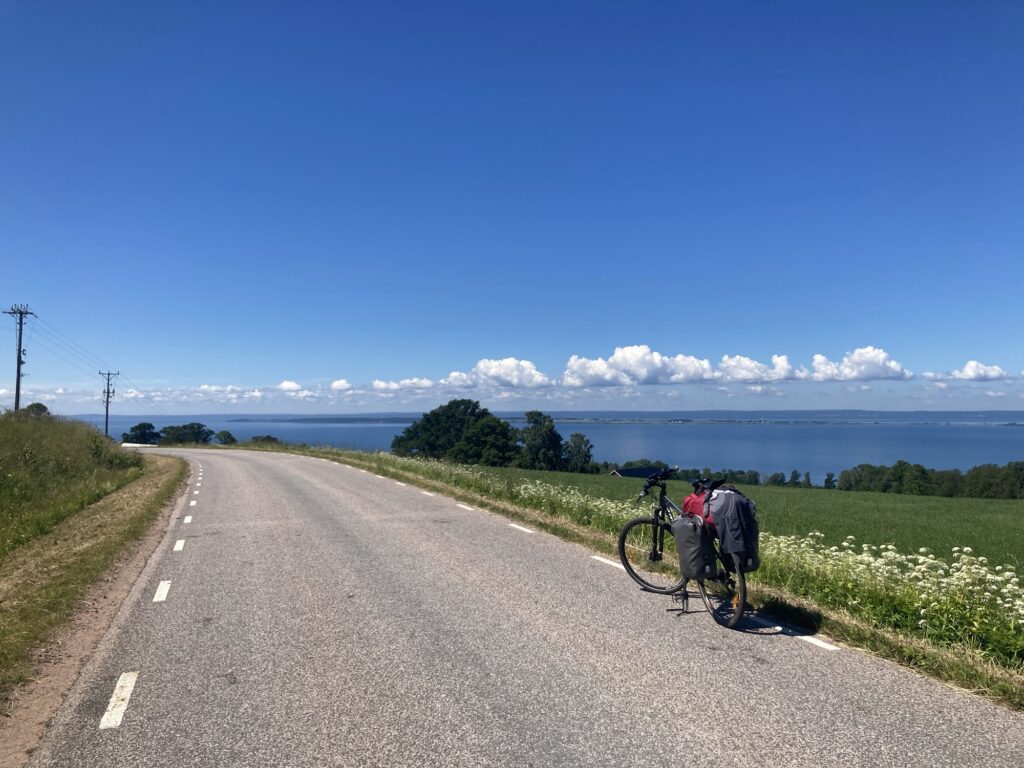
Kiedy rok temu jechałem przez malownicze Östergötland i wzdłuż jeziora Vättern, dowiedziałem się o Vätternrundan – rajdzie rowerowym odbywającym się wokół tego jeziora od 60 lat. Zamarzyłem, żeby kiedyś wziąć w nim udział, choć długość przejazdu wydawała się zabójcza – 315 kilometrów. Potem w Polsce rozmawialiśmy z tatą o tym rajdzie. Łapał się za głowę, że można na raz tyle przejechać rowerem. Zawsze mi kibicował w moich wyprawach, nie tylko rowerowych, a potem z dumą opowiadał znajomym i rodzinie o kolejnym osiągnięciu swojego syna. Sam nie wiem czy niektórych z nich nie planowałem właśnie z myślą o nim. Więc kiedy powiedziałem mu, że się zarejestrowałem – z uśmiechem na twarzy powiedział, że na pewno mi się uda.
En: When I was cycling through the picturesque region of Östergötland and along Lake Vättern last year, I learned about Vätternrundan – a cycling event that has taken place around the lake for the past 60 years. I dreamed of taking part in it one day, even though the distance seemed brutal – 315 kilometers. Later, back in Poland, my dad and I talked about the ride. He shook his head in disbelief that anyone could ride that far in one go. He always cheered me on in my adventures, not just the cycling ones, and would proudly tell friends and family about his son’s latest achievement. Honestly, I’m not sure if I didn’t plan some of those adventures partly with him in mind. So when I told him I had registered for the ride, he smiled and said he was sure I’d make it.
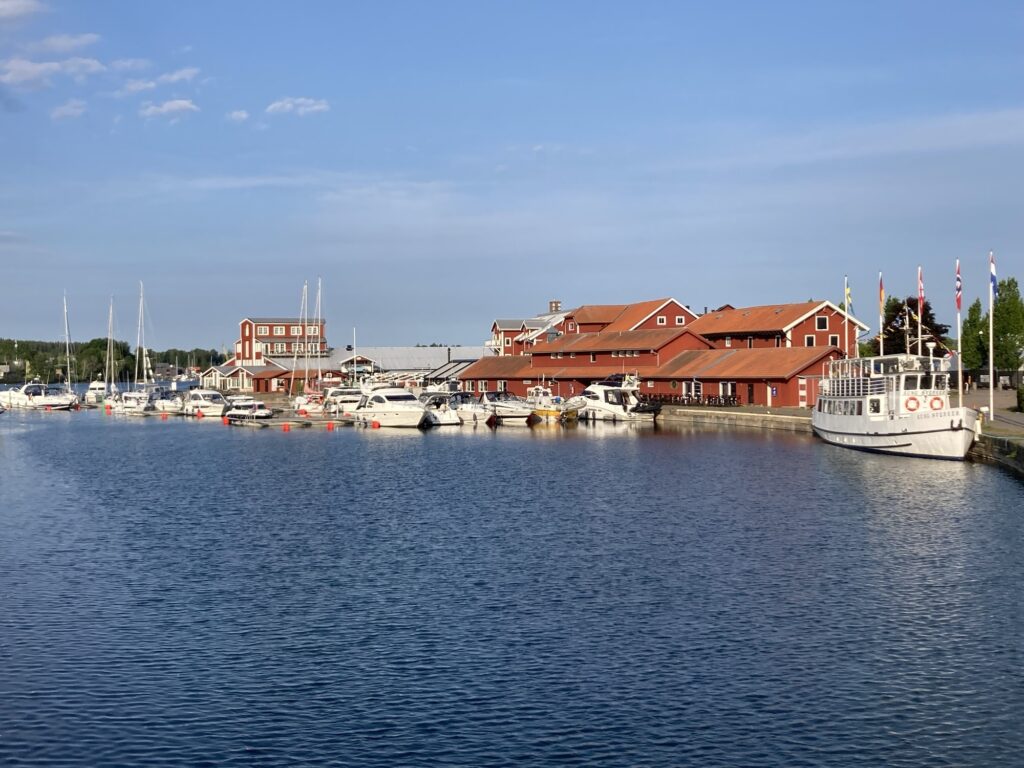
Rajd zaczyna się w Motali i biegnie drogami asfaltowymi (i czasem brukowanymi) wokół jeziora Vättern, przechodząc przez sporo małych miejscowości i kilka miast. Nie są to warunki, w których Kolubryna byłaby najlepszym wyborem jeśli chce się go przejechać w ciągu doby. Pomyślałem, że tu potrzeba raczej czegoś lżejszego z jak najmniejszymi oporami toczenia. Rower szosowy! Problem polega na tym, że nic o nich nie wiem. Na moje szczęcie istnieją firmy, które specjalizują się w wypożyczaniu rowerów specjalnie na Vätternrundan. Zdecydowałem się na wypożyczenie szosówki w ten sposób. Niespecjalnie przywiązuje wagę do marek i modeli, zaznaczyłem po prostu że ma być duży, żebym nie szorował kolanami o asfalt.
En: The ride starts in Motala and follows paved roads (and occasionally cobblestone ones) around Lake Vättern, passing through many small towns and a few cities. These aren’t exactly the conditions where Kolubryna would be the ideal choice – at least not if I wanted to complete the route within a single day. I figured I needed something lighter, with minimal rolling resistance. A road bike! The problem was – I knew nothing about them. Luckily, there are companies that specialize in renting bikes specifically for Vätternrundan. So I decided to go that route and rent a road bike. I’m not particularly picky about brands or models; I just made sure to check the box for “large” so I wouldn’t end up scraping my knees on the asphalt.
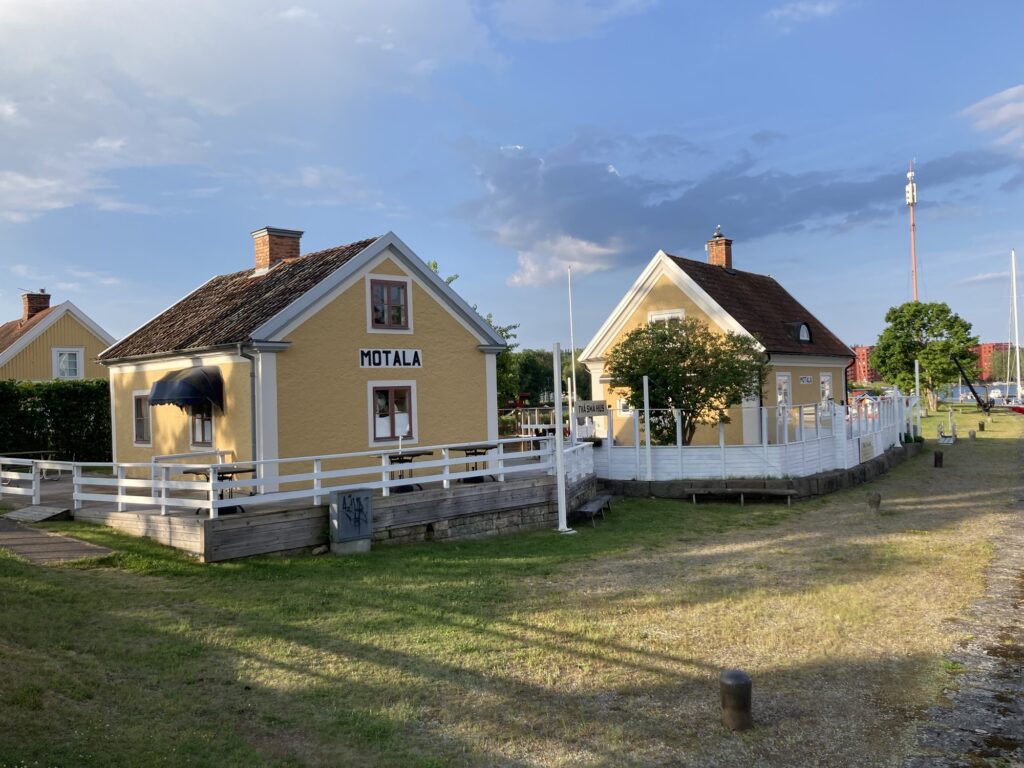
Z noclegiem też nie było problemu. Organizator imprezy pomaga znaleźć miejsca do spania w Motali. Jak się dowiedziałem, niektórzy mieszkańcy żeby uciec przed zgiełkiem, wyjeżdżają z miasta na czas wyścigu i zostawiają swoje domy na wynajem dla rowerzystów. Dostałem miejsce właśnie w takim domu z innymi rowerzystami.
En: Accommodation wasn’t a problem either. The event organizers help participants find places to stay in Motala. As I found out, some of the locals actually leave town during the race to escape the hustle and bustle, and rent out their homes to cyclists. I ended up staying in one of those houses, sharing it with a few fellow riders.
Nigdy wcześniej nie jeździłem na szosówce, ani nie brałem udziału w wyścigu rowerowym, więc bylem pełen obaw. Najdłuższa trasa rowerowa, 240 km z Warszawy do Torunia, zajęła mi około 20 godzin. Tyle że była to trasa krajoznawcza, z postojami na zdjęcia. Był nawet jeden postój na drzemkę 🙂
En: I had never ridden a road bike before, nor had I ever taken part in a cycling race, so I was full of doubts. My longest ride up to that point – 240 kilometers from Warsaw to Toruń – had taken me about 20 hours. But that was more of a scenic route, with plenty of stops for photos. There was even one stop for a nap 🙂
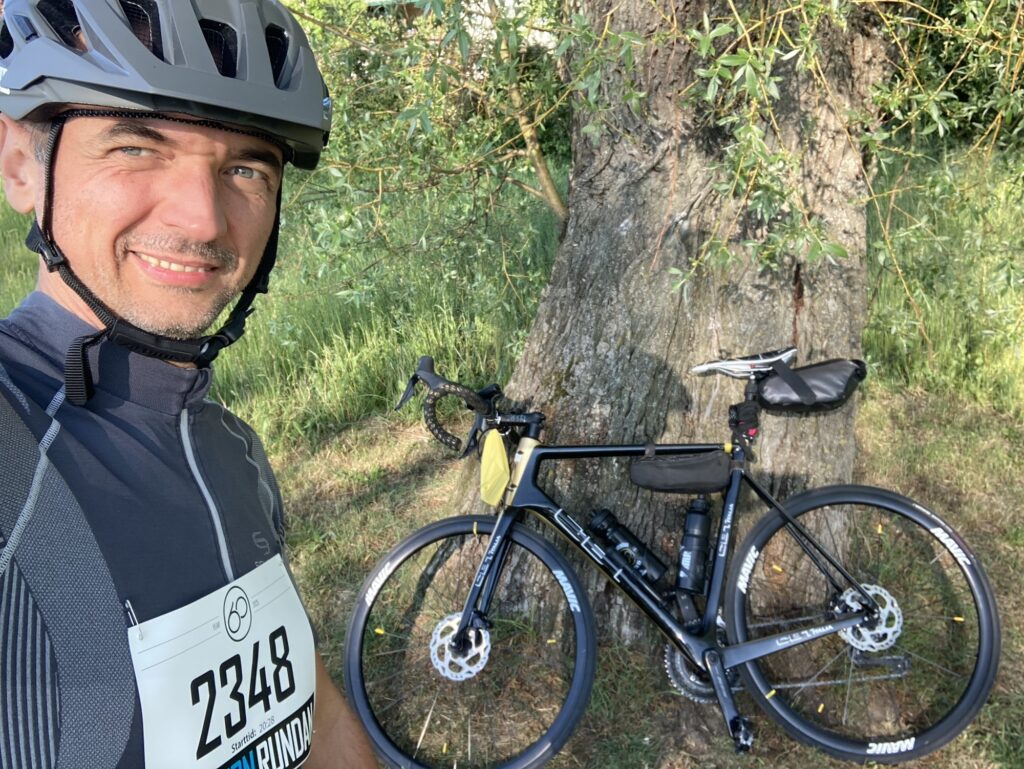
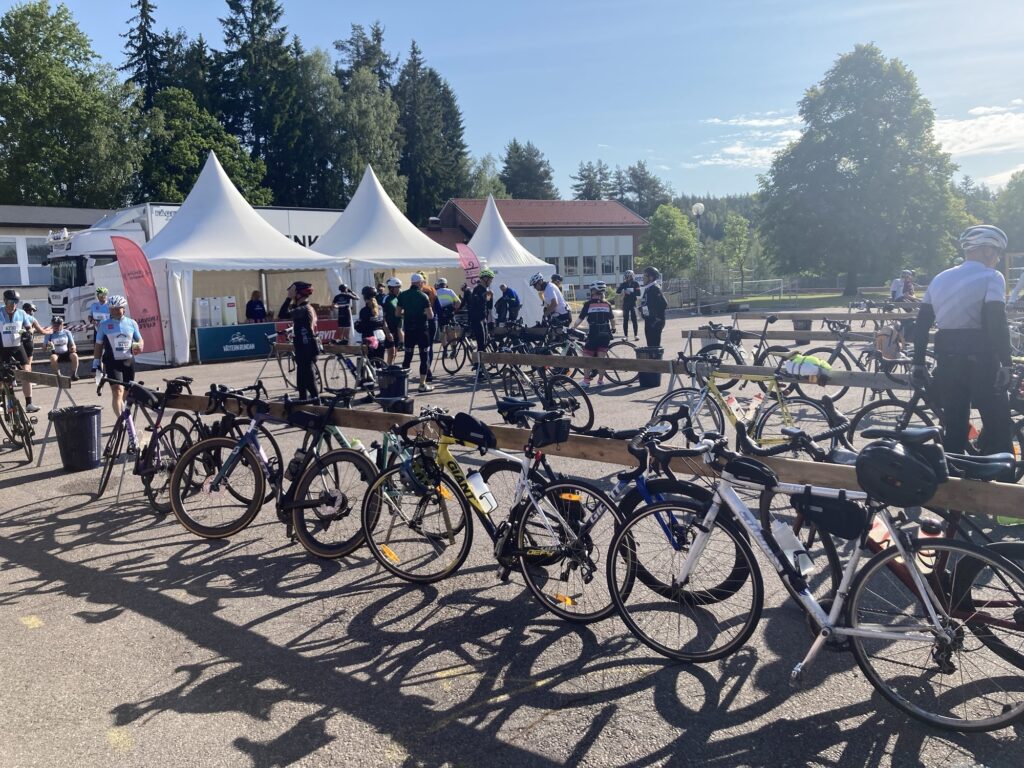
W dniu wyścigu podszedłem do bike expo, gdzie swój punkt miał Fredrik, z którym byłem umówiony na wypożyczenie roweru. Rower już czekał, a z Fredrikiem tak dobrze nam się rozmawiało, że aż szkoda mi było odchodzić. Pomógł mi z konfiguracją osprzętu na rowerze, torebki, zapięcie, oświetlenie. Zaopatrzył w zapasową dętkę i klucze, pokazał co i jak w rowerze (pierwszy raz miałem do czynienia z elektrycznymi przerzutkami).
En: On the day of the race, I headed over to the bike expo, where Fredrik – the guy I had arranged the bike rental with – had his stand. The bike was already waiting for me, and we ended up having such a good conversation that I almost didn’t want to leave. He helped me set everything up: the gear, saddle bag, lock, and lights. He provided a spare tube and tools, and walked me through how everything worked (it was my first time using electronic shifters!).
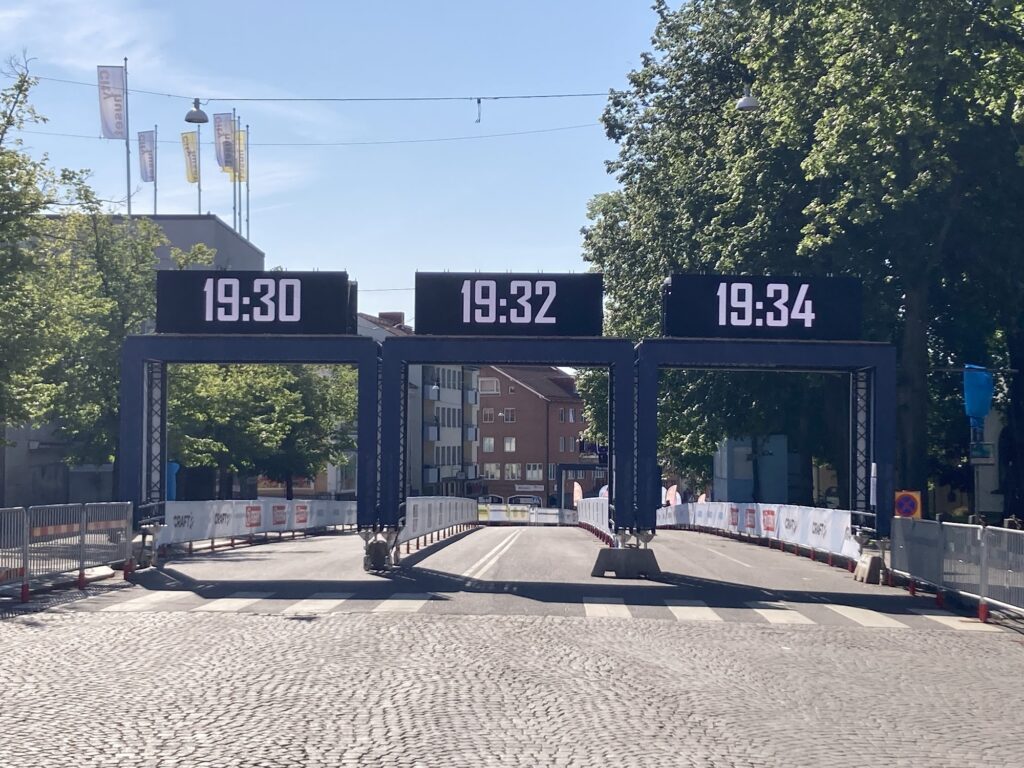
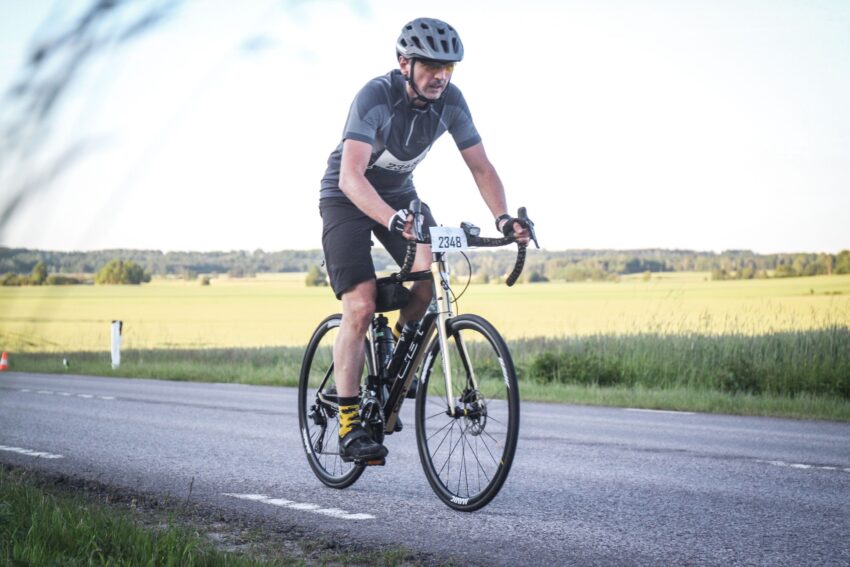
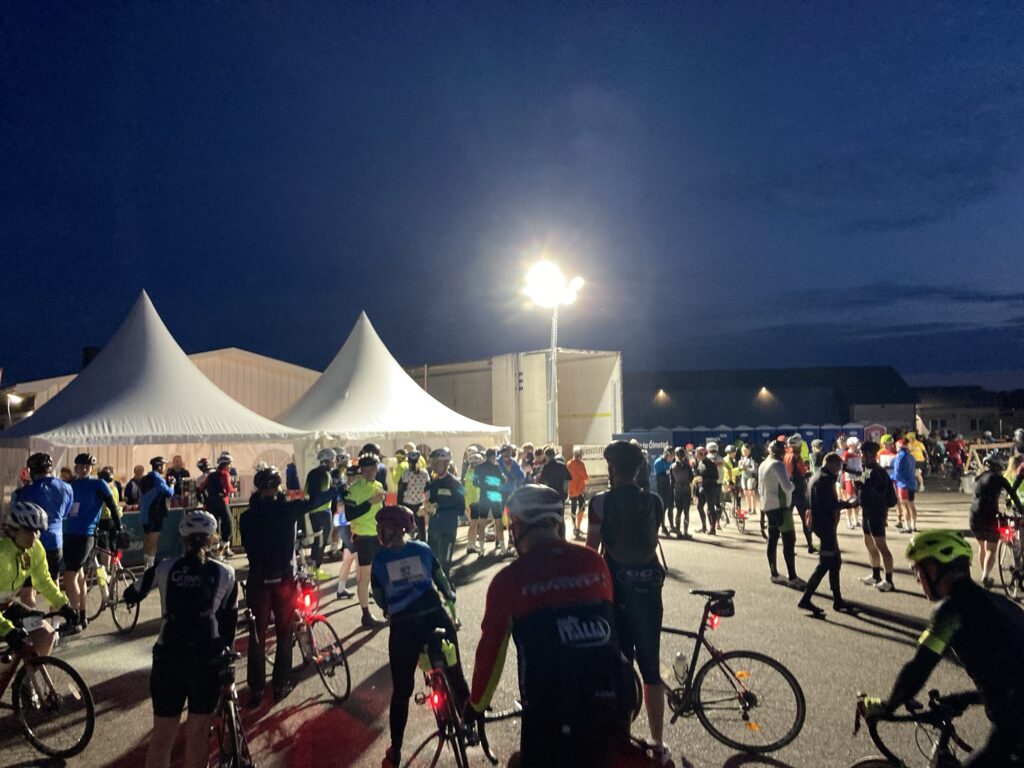
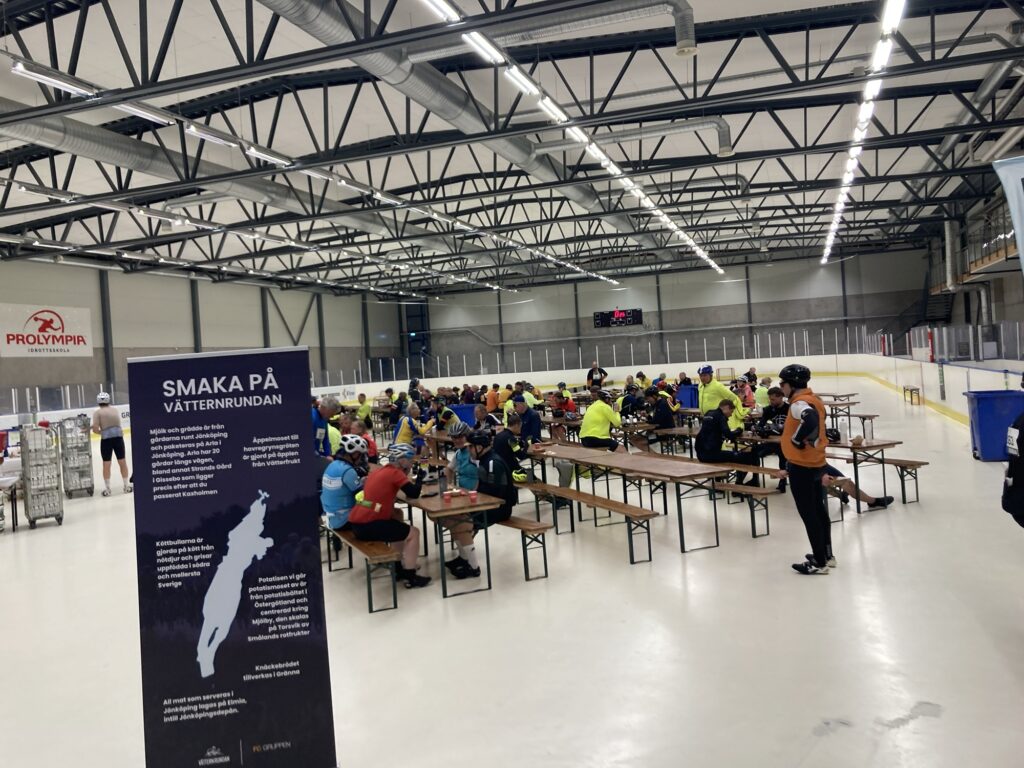
Wyścig zaczyna się o 19:30, kolarzy jest dużo (Fredrik mówił, że w tym roku około 20 tysięcy), więc są podzieleni na grupy. Grupy startują w dwuminutowych odstępach, moja grupa startowała o 20:28. Tak że czekała mnie jazda nocna. Wyposażyłem rower w dodatkowy reflektor, którego używam jak jeżdżę nocą Kolubryną po lasach. Prognoza pogody mówiła, że temperatura w nocy nie spadnie poniżej 11 stopni, więc ograniczyłem dodatkowe ubrania wyłącznie do bluzy rowerowej (tzw. middle layer). Zabrałem też kilka batonów z orzechami i czekoladą i parę izotonicznych napojów energetycznych. Z tymi ostatnimi nie miałem żadnego doświadczenia, ale naczytałem się że to podstawa w takich wyścigach, a w bike expo sprzedawali je na każdym kroku. Były wręcz stacje uzupełniania tych specyfików. Tak że na próbę kupiłem kilka saszetek.
En: The race starts at 7:30 PM, and with so many cyclists taking part – Fredrik mentioned around 20,000 this year – they’re divided into groups. Each group sets off at two-minute intervals, and mine was scheduled to start at 8:28 PM. That meant a night ride was ahead of me. I equipped the bike with an extra headlamp – the same one I use when riding Kolubryna through the woods at night. The weather forecast predicted the temperature wouldn’t drop below 11°C during the night, so I limited my extra clothing to just a cycling mid-layer. I also packed a few nut-and-chocolate bars and some isotonic energy drinks. I had no prior experience with the latter, but I’d read that they’re essential in races like this, and they were being sold everywhere at the bike expo. There were even refill stations dedicated to them. So, I bought a few sachets to try.
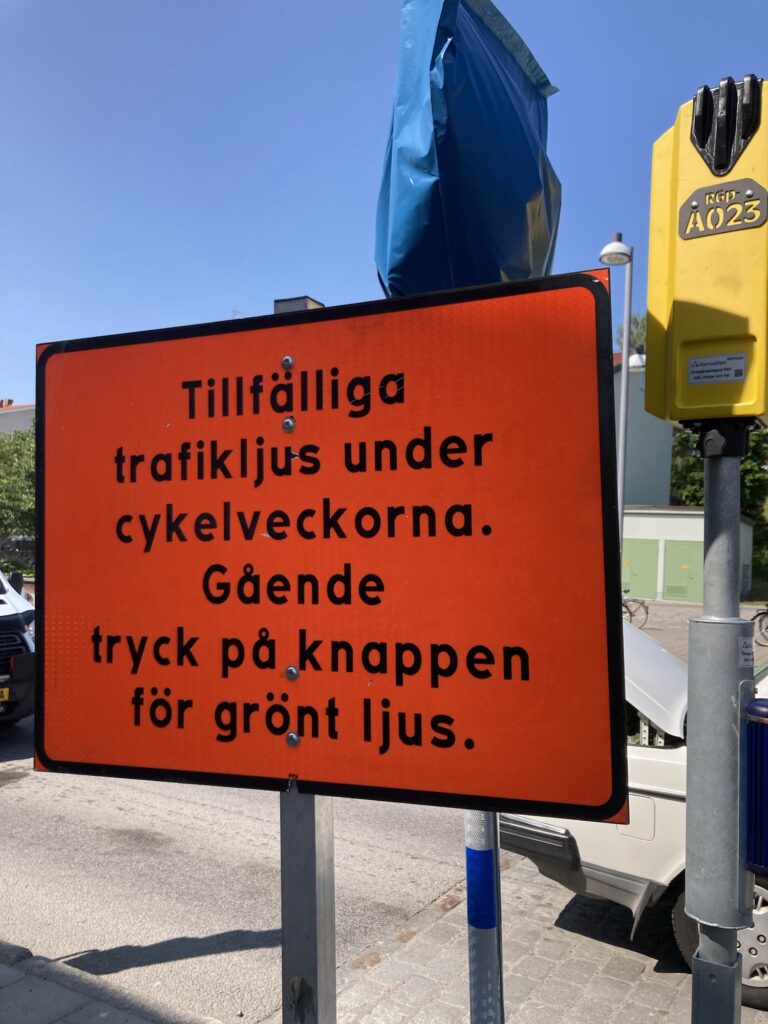
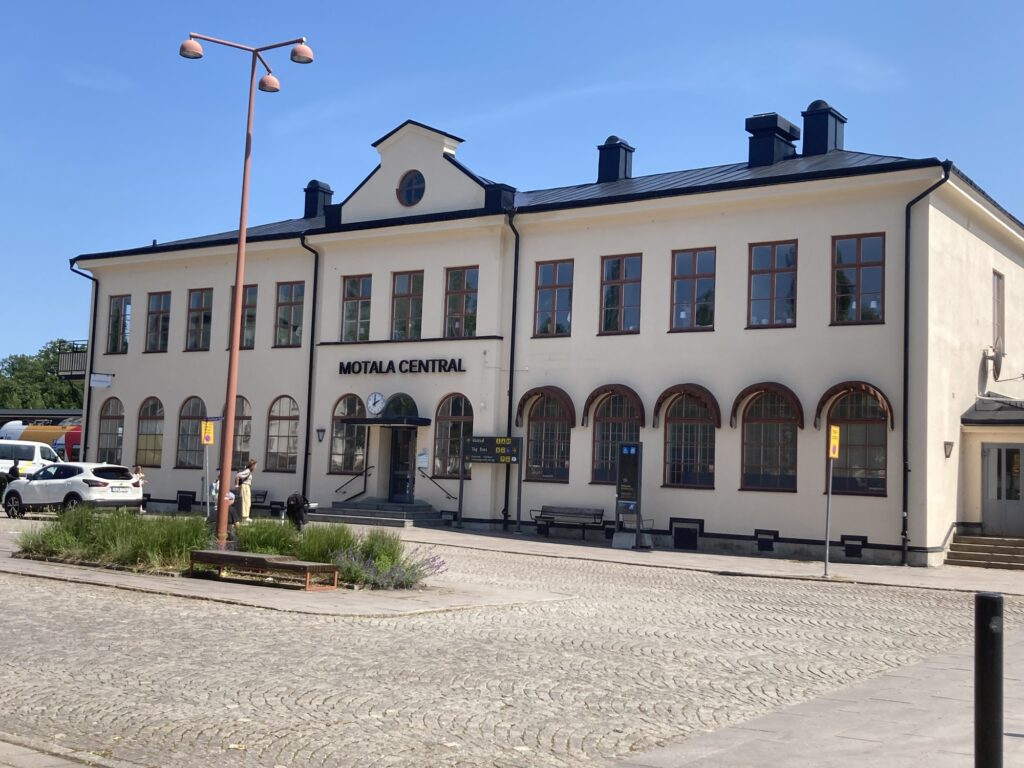
Motala żyła wyścigiem. Na rynku i przylegających ulicach pełno było rowerzystów. Większość z nich młoda, wysportowana w pięknych, dopasowanych strojach i z imponującymi rowerami. Mój impostor syndrom zaczął o sobie przypominać. Wtedy Ida podesłała mi artykuł o Stigu Johanssonie, który ma 79 lat i w tym roku jedzie swój 60. Vätternrundan. To znaczy że brał udział we wszystkich zorganizowanych do tej pory! Jeździ w wytartych jeansach, żółtej kurtce, magnetofonem w koszyku, na rowerze marki Husqvarna z 1937 roku. Uprawia też inne sporty, trenuje drużynę siatkówki i w ogóle jest człowiekiem orkiestrą, a na rowerze jeździ bo lubi. Bardzo zaimponowało mi jego podejście.
En: Motala was alive with the spirit of the race. The town square and surrounding streets were filled with cyclists. Most of them were young, athletic, dressed in sleek, form-fitting gear, and riding top-of-the-line bikes. That’s when my impostor syndrome started creeping in. But then Ida sent me an article about Stig Johansson, a 79-year-old who was riding his 60th Vätternrundan this year. That means he’s taken part in every single edition of the race since it began! He rides in worn-out jeans, a yellow jacket, with a tape player in his basket, on a 1937 Husqvarna bike. He’s also active in other sports, coaches a volleyball team, and is basically a one-man band. And he rides simply because he loves it. His attitude really made a strong impression on me.
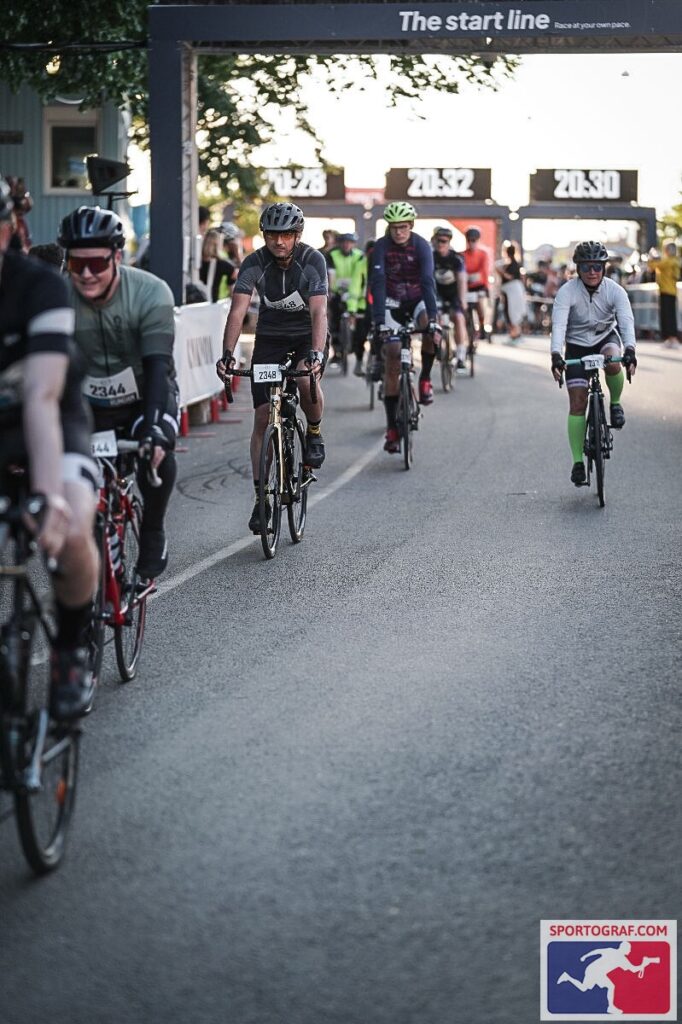
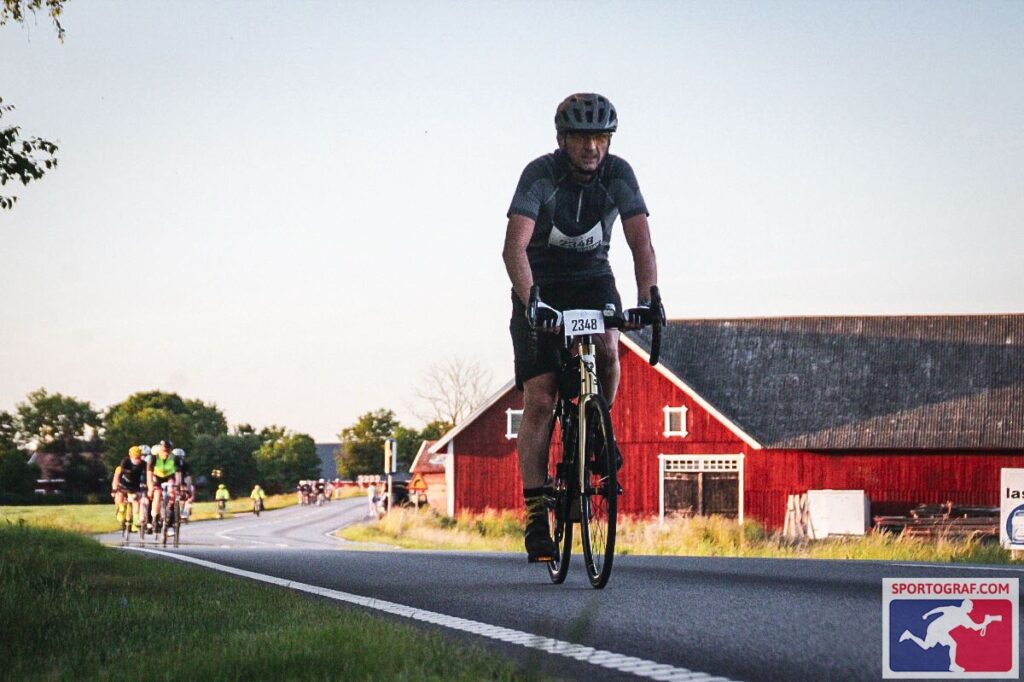
Start odbył się planowo o 20:28. Wyjazd z miasta za prowadzącym motocyklem trwał parę minut, po czym grupa została sama na drodze. Tzn. sama to niezbyt precyzyjne określenie, bo pobocza wypełnione były kibicami jeszcze bardzo długo. Ludzie wiwatowali, dopingowali, śpiewali, chcieli zbijać piątki z jadącymi kolarzami. Było to uskrzydlające i wywoływało uśmiech na mojej twarzy.
En: The race started right on schedule at 8:28 PM. We rolled out of town behind a lead motorcycle for the first few minutes, and then the group was left on its own on the open road. Well – “on its own” isn’t quite accurate, because the roadside was lined with cheering spectators for a long stretch. People were clapping, shouting encouragement, singing, and reaching out to high-five passing cyclists. It was incredibly uplifting and brought a huge smile to my face.
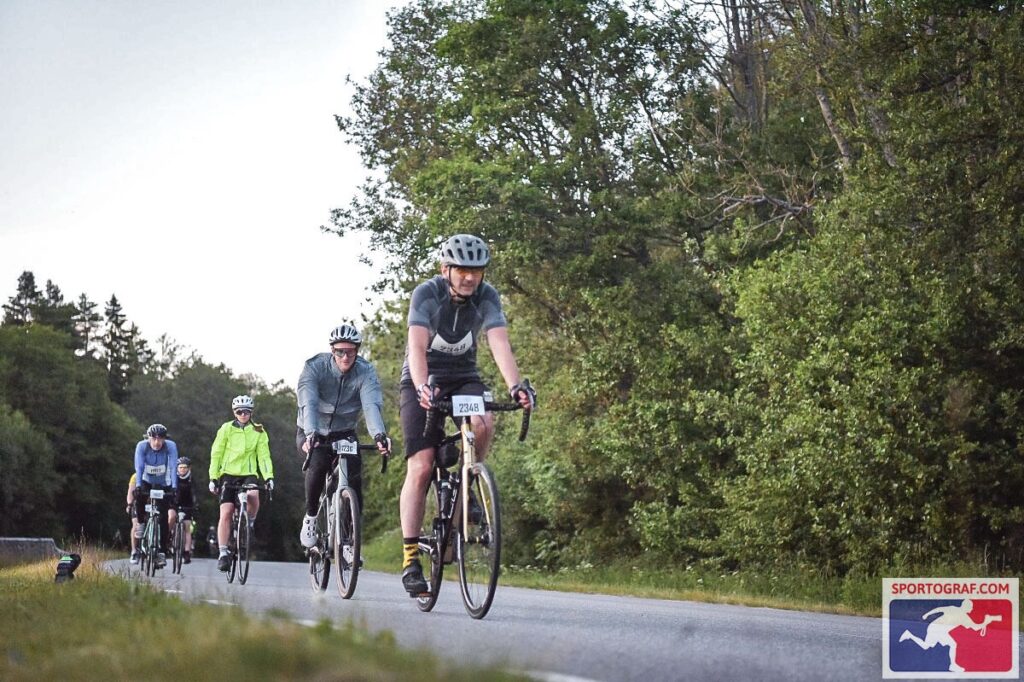
Jazda w grupie bardzo różni się od samotnych wypraw. Praktycznie cały czas jedzie się bardzo blisko z innymi rowerzystami. Bardzo blisko czasem oznacza pół metra, ale czasem jak jest gęsto (np. dwie grupy się wyprzedzają) ta odległość spada do kilkunastu centymetrów. Grupa nadaje tempo, co w niektórych sytuacjach może wydawać się uciążliwe (np. jedzie wolniej niż by można, albo za szybko) ale z drugiej strony bycie jej częścią motywuje, zwiększa poczucie bezpieczeństwa, uskrzydla. Grupa jedzie w milczeniu, ale porozumiewa się za pomocą gestów. Machnięcie prawą ręką za plecami oznacza “przeszkoda z prawej do ominięcia”. Wskazanie w dół palcem oznacza “uważaj na coś na drodze (np. dziura, czy leżący obiekt)”, wskazanie ręką z obrotem głowy w tę stronę zwykle znaczy “będę tu wjeżdżać, więc trzymaj odstęp”. Będąc częścią grupy nie widzisz drogi przed sobą, ale dzięki tym komunikatom korzystasz z oczu całej grupy. Jesteś częścią większego organizmu, który wspólnie podąża wyznaczoną trasą. Wjechanie szosówką dziurę w asfalcie przy prędkości 30 km/h kończy się zwykle kraksą nie tylko twoją, ale też tych, którzy jadą bezpośrednio za tobą. Dlatego grupie zależy na sprawnej komunikacji.
En: Riding in a group is very different from solo touring. You’re almost always riding very close to other cyclists. Sometimes “very close” means half a meter, but when it gets crowded—like when two groups are overtaking each other—that distance can shrink to just a few centimeters. The group sets the pace, which can sometimes feel limiting—either too slow or too fast—but being part of it is also incredibly motivating. It boosts your sense of safety and gives you wings. The group rides in silence, but communicates through gestures. A wave of the right hand behind the back means “obstacle on the right, pass on the left.” Pointing down with a finger signals “watch out for something on the road” (like a pothole or an object). A hand motion combined with a head turn usually means “I’m about to move in this direction, give me space.” When you’re in the group, you often can’t see the road ahead—but thanks to these signals, you’re using the eyes of everyone around you. You become part of a larger organism moving together along the designated route. Hitting a pothole with a road bike at 30 km/h doesn’t just end badly for you—it can cause a crash for those riding directly behind you. That’s why clear, quick communication within the group is crucial.
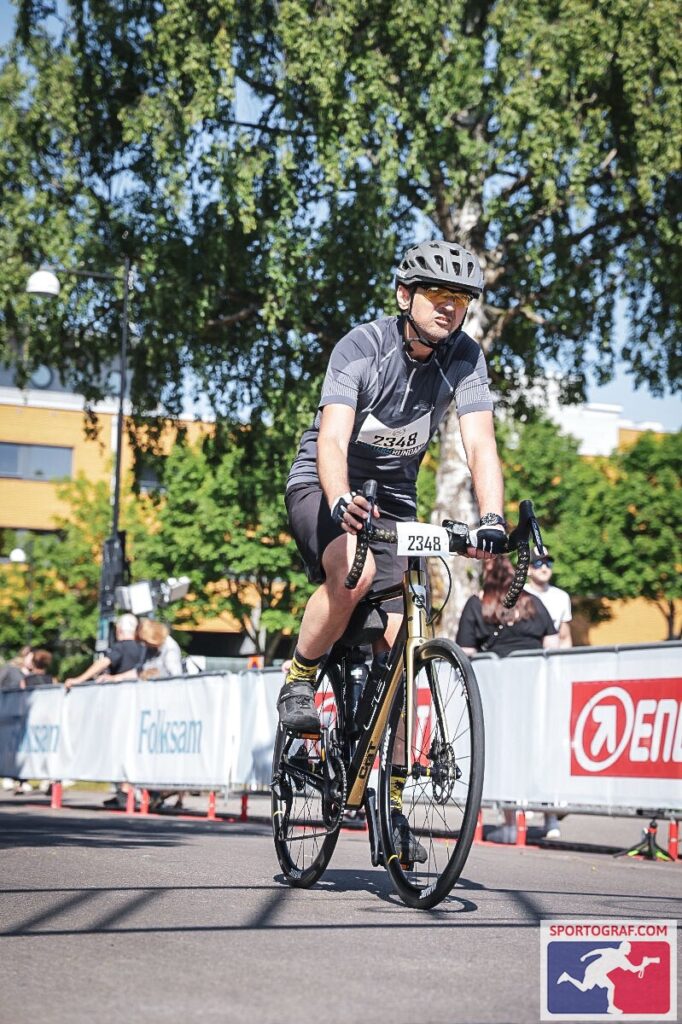
Na trasie wyścigu nie ma ustalonych grup (poza klubami sportowymi). Rowerzyści z czasem się męczą, inni uznają, że grupa ich spowalnia i decydują się oderwać, niektórzy zjeżdżają z trasy na postój. Dlatego grupy ewoluują, powiększają się i zmniejszają, rozpadają się i tworzą nowe, rozciągają się do kilkudziesięciu metrów i znów zwijają do zwartych form, skład grup regularnie się wymienia. Jeździłem w grupach kilkuosobowych i kilkunastoosobowych. Większe niż kilkanaście osób miały dla mnie zbyt duży bezwład. Jeździłem też za pojedynczymi rowerzystami, których tempo jazdy mi odpowiadało. Zalet jechania za kimś nie da się przecenić, zwłaszcza kiedy ma się do przejechania ponad 300 kilometrów.
En: There are no fixed groups along the race route (aside from organized cycling clubs). Riders get tired over time, some feel that the group is slowing them down and choose to break away, others pull over for a rest. Because of this, groups are constantly evolving – growing and shrinking, breaking apart and reforming, stretching out over dozens of meters and then compressing back into tighter formations. The composition of each group shifts regularly. I rode in small groups of just a few people, and in larger ones with over a dozen. Anything bigger than that felt too sluggish and unwieldy for me. I also rode behind solo cyclists whose pace matched mine. The benefits of riding behind someone can’t be overstated – especially when you’ve got over 300 kilometers ahead of you.
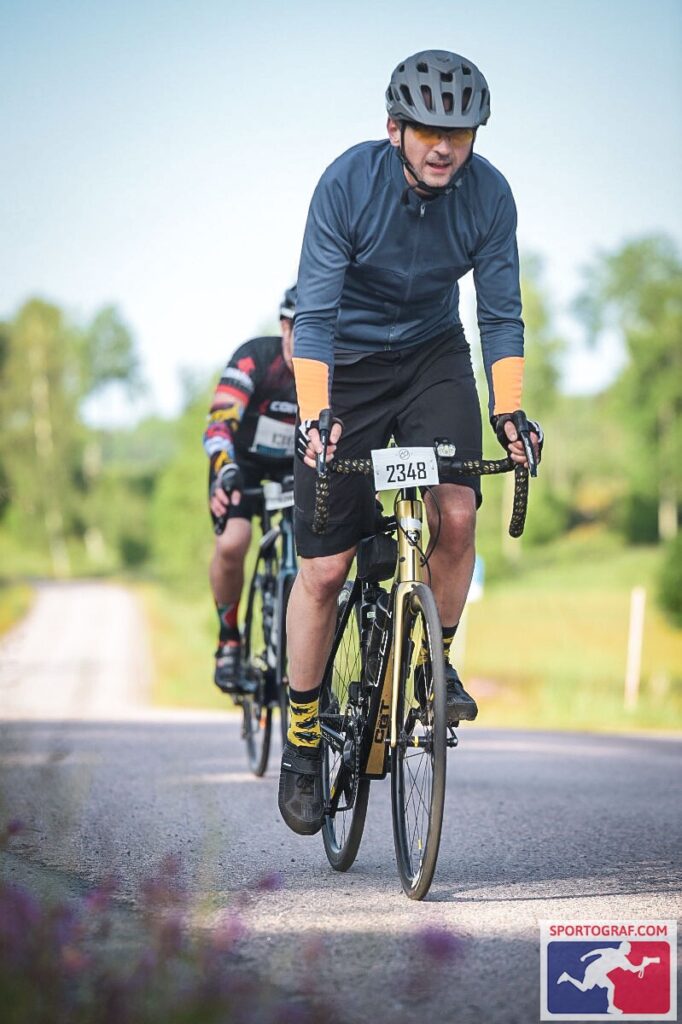
Nie było ani jednej godziny podczas wyścigu, w której nie mijałbym fanów wyścigu. Po ich liczbie można było wnioskować czy jest się daleko od miasta. Wiwatowali, dopingowali, machali szwedzkimi flagami. Sporo osób zorganizowało imprezy w swoich ogrodach, położonych na trasie przejazdu. Była muzyka, ogniska (nie bez znaczenia w nocy przy dość niskich temperaturach). “Dawaj dawaj”, “ale ciśniesz!”, “nie przestawaj!”, “tak dalej!”, “co za walka!”. Nie zapamiętałem wszystkich, a części nie rozumiałem po szwedzku. Byli tacy, którzy ustawiali się do zbijania piątek z kolarzami. Sam zbiłem kilka piątek, choć piątka przy 30 km/h może być bolesna, ale adrenalina działa jak środek przeciwbólowy.
En: There wasn’t a single hour during the race when I wasn’t passing by fans. You could tell how far you were from a town just by the number of people cheering along the road. They waved Swedish flags, clapped, shouted encouragement. Many had set up garden parties right along the route – there was music, bonfires (very welcome at night, given the chilly temperatures). “Come on!”, “You’re crushing it!”, “Don’t stop!”, “Keep going!”, “What a fight!”—these are just some of the things I remember. I didn’t catch everything, and I couldn’t understand some of the Swedish. There were even people lining up to high-five the riders. I gave out a few myself, though a high five at 30 km/h can sting a bit – thankfully, adrenaline is a great painkiller.
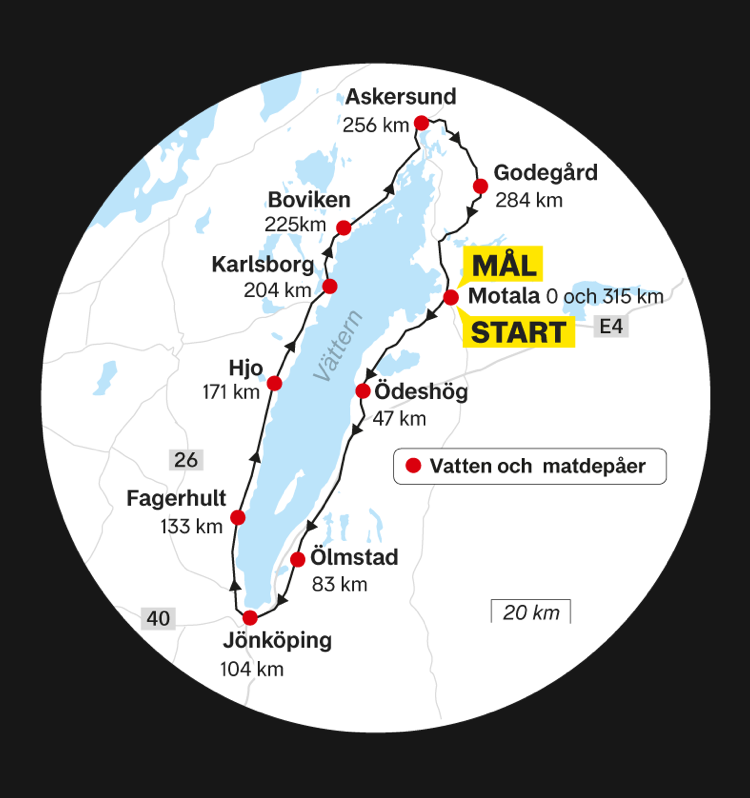
Wzdłuż trasy organizatorzy ustawili 10 depotów (punktów z jedzeniem, wodą, lekarzem, serwisem rowerowym). Pierwszy depot na 47 kilometrze ominąłem, bo nie byłem jeszcze zmęczony i dobrze mi się jechało z grupą. Myślałem że ominę też następny, ale zaczynałem czuć zmęczenie, a moja grupa praktycznie się rozpadła, więc zjechałem na 83 kilometrze w miejscowości Ölmstad. Uznałem że pora wypróbować żel energetyczny, których zapas wiozłem ze sobą. Na szczęście saszetka była mała, bo żel w smaku był okropny i przyprawił mnie o mdłości. Postanowiłem, że słodkie bułeczki i kawa, które serwowano na postoju będą lepszym wyborem. Od tamtej pory ładowałem nimi akumulatory na każdym postoju.
En: Along the route, the organizers had set up 10 depots – stations with food, water, medical staff, and bike repair services. I skipped the first one at the 47-kilometer mark because I wasn’t tired yet and was riding comfortably with my group. I thought I’d skip the next one too, but fatigue was starting to creep in, and my group had pretty much fallen apart. So I pulled into the depot at the 83-kilometer mark in the town of Ölmstad. I figured it was time to try one of the energy gels I had brought with me. Fortunately, the sachet was small, because the gel tasted awful and made me feel nauseous. I quickly decided that the sweet buns and coffee being served at the stop were a much better option. From that point on, they became my go-to fuel at every depot.
Trzy z dziesięciu depotów serwowały ciepłe posiłki. Planowałem przerwy w taki sposób, żeby się w nich zatrzymać. W Jönköping (postój na 104 kilometrze) były to kötbullar (po polsku klopsiki z Ikei) z musem ziemniaczanym i żurawiną. W miejscowości Hjo (postój na 171 kilometrze) – lazania. Po dojechaniu na metę w Motali serwowano też burgery. W każdym przypadku przygotowano wersje dla wegetarian, wegan, jaki i kolarzy posiadających różne alergie.
En: Three of the ten depots offered hot meals, and I planned my breaks to make sure I stopped at those. In Jönköping (the stop at the 104-kilometer mark), they served köttbullar—Swedish meatballs (or as we call them in Poland, “IKEA meatballs”)—with mashed potatoes and lingonberry jam. In the town of Hjo (171 kilometers in), it was lasagna. And at the finish line in Motala, they were serving burgers. In every case, they had options for vegetarians, vegans, and cyclists with various food allergies.
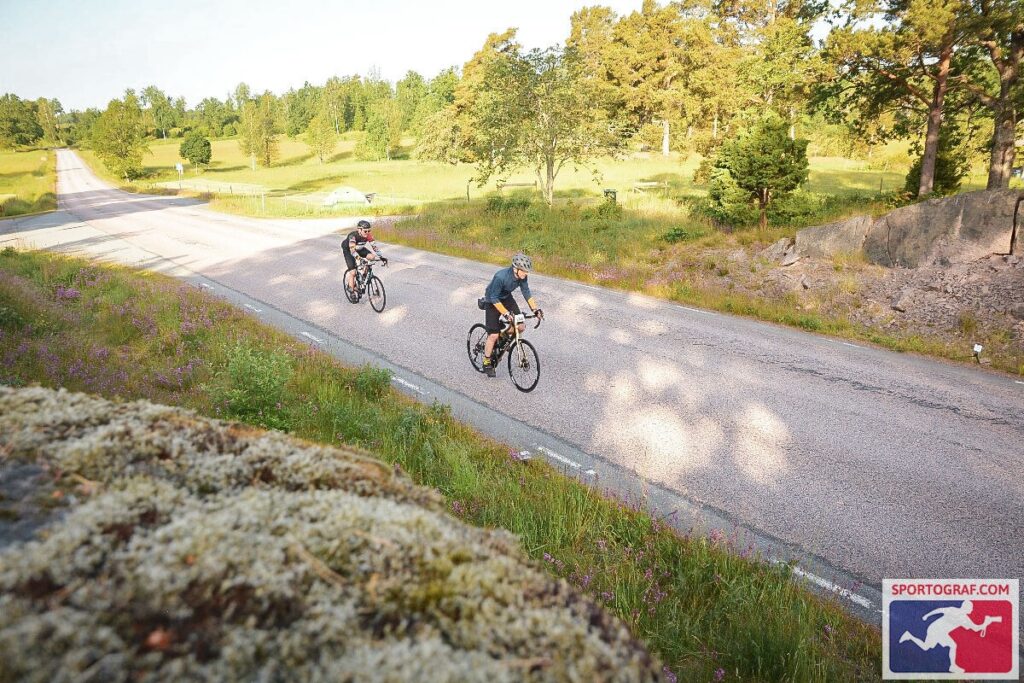
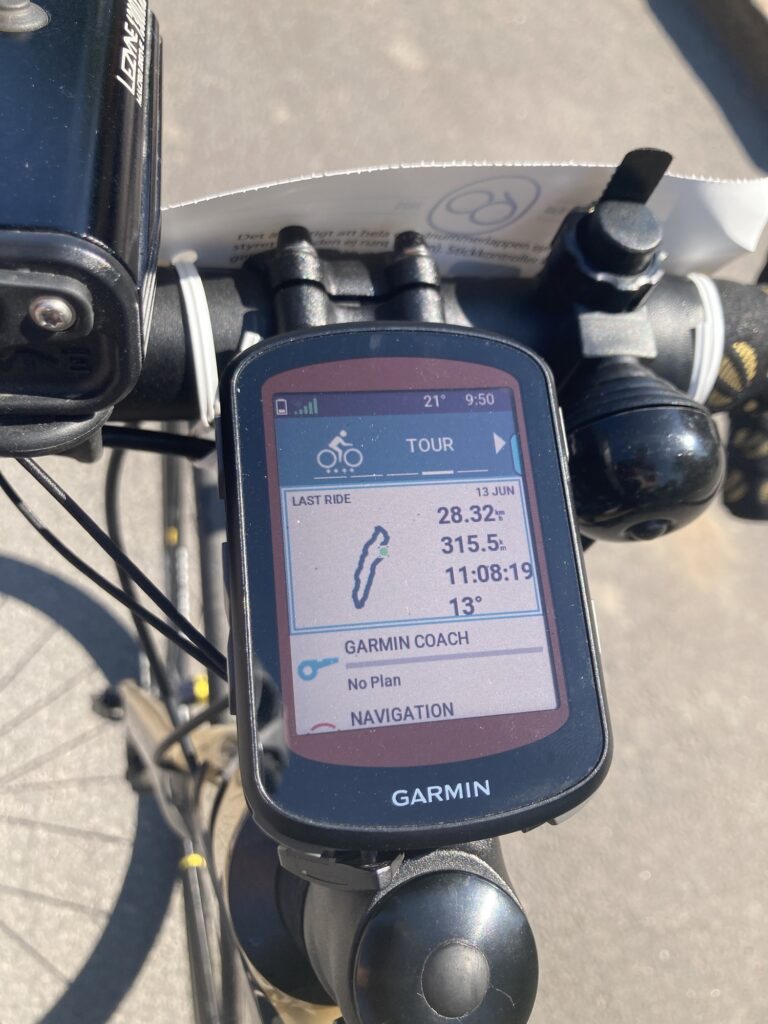
Słońce zaszło około 22, ale jeszcze jakiś czas było jasno. Temperatura też nie wymagała założenia bluzy, w Jönköping, które jest dość sporym miastem, było wręcz kilka stopni cieplej. Tuż za Jönköping na profilu wysokościowym wyścigu zaznaczono pierwszy poważny podjazd. Trochę się go bałem, ale z drugiej strony pamiętałem to miejsce. Przecież ja już tu byłem rok temu i wyjeżdżałem z tego miasta, a jedyne co pamiętam z tego podjazdu to to, że mój Garmin mnie przed nim ostrzegł 🙂
En: The sun set around 10 PM, but it stayed light for a while after that. The temperature didn’t drop enough to warrant putting on my mid-layer—in fact, in Jönköping, which is a fairly large city, it was actually a few degrees warmer. Just past Jönköping, the race’s elevation profile marked the first serious climb. I was a bit nervous about it, but on the other hand—I remembered that place. I had been there the year before, after all, riding out of the city. And the only thing I truly remembered about that climb was my Garmin warning me it was coming 🙂
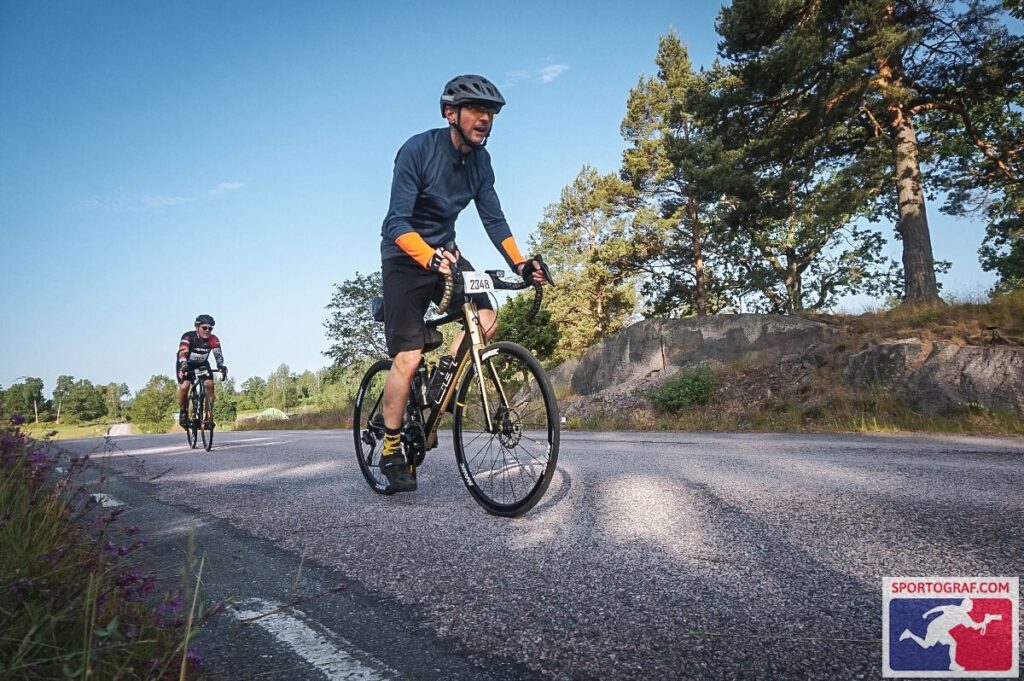
Nie myliłem się, podjazd (a raczej seria podjazdów) nie były tak straszne jak malował to profil wysokościowy. Po wspięciu się na górę była już noc. Nie były to kompletne ciemności, takie rzeczy nie występują w Szwecji o tej porze roku, ale jednak było ciemniej. Słońce lekko schowało się pod horyzontem, czemu towarzyszyły spektakularne efekty wizualne. Nad jeziorem Vättern chmury były pomalowane na pomarańczowo i różowo. Trzeba było się pilnować, żeby się koncentrować na drodze, bo widoki były nieziemskie.
En: I wasn’t wrong – the climb (or rather, the series of climbs) wasn’t nearly as intimidating as the elevation profile had made it look. By the time I reached the top, night had fully set in. It wasn’t total darkness though – such a thing doesn’t really happen in Sweden this time of year – but it was noticeably dimmer. The sun had dipped just below the horizon, creating a spectacular visual show. Over Lake Vättern, the clouds were painted in shades of orange and pink. It was hard to keep my focus on the road – the views were absolutely breathtaking.
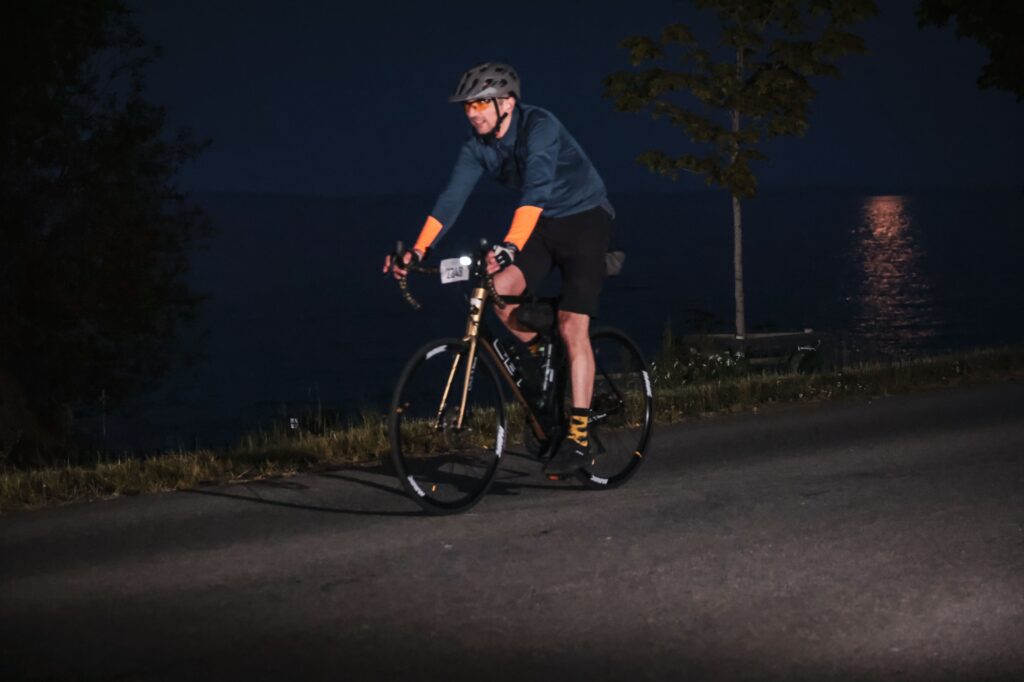
Wraz z nadejściem nocy, temperatura zaczęła spadać. Nie od razu, ale powoli z czasem. Dobrze mi się jechało w grupie, więc ominąłem postój na 133 kilometrze. Moja grupa jednak rozpadła się, a po tej stronie jeziora, rowerzystów było wyraźnie mniej. Rzadziej też spotykało się grupy, było sporo samotników. Bywało tak, że z utęsknieniem wypatrywało się czerwonych lampek rowerowych, żeby móc się do kogoś podłączyć i nie jechać samemu. W takich chwilach dziękowałem sobie za wzięcie reflektora, który dzielnie rozświetlał drogę przede mną. Niby w tej szarówce widać było drogę, ale światło i pełna widoczność drogi przed sobą ma kolosalne znaczenie dla poczucia bezpieczeństwa. Parę razy zresztą reflektor uchronił mnie przed wjechaniem w dziurę w drodze, której nie zobaczyłbym bez niego.
En: As night settled in, the temperature began to drop – not suddenly, but gradually over time. I was riding comfortably with a group, so I skipped the 133-kilometer stop. However, that group eventually broke apart, and on this side of the lake, there were noticeably fewer cyclists. Groups were rarer, and I saw a lot of solo riders. There were moments when I found myself eagerly scanning the darkness for the red tail lights of other bikes, just to have someone to ride with and avoid being completely alone. In those moments, I was especially grateful for bringing my headlamp, which faithfully lit up the road ahead. Sure, you could make out the road in the twilight, but having a clear, illuminated path in front of you makes a huge difference in how safe you feel. A few times, that headlamp even saved me from riding straight into potholes I would have never spotted without it.
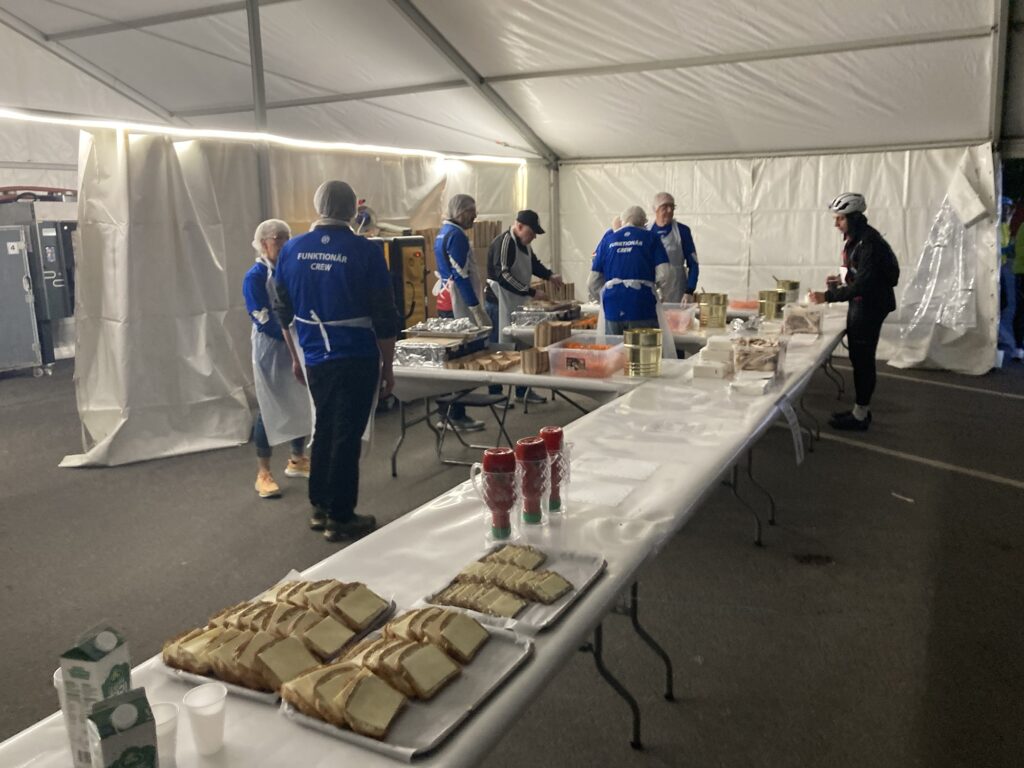
Na 171 kilometrze zjechałem do depotu w miejscowości Hjo. Nie zdawałem sobie sprawy jaka jest temperatura, a było (jak potem sprawdziłem) 8 stopni, jak i z tego że depot znajduje się nad samym jeziorem i o 3 nad ranem wilgotność tam jest bardzo wysoka, co sprawia że niskie temperatury są bardziej dotkliwe. Koniec ruchu oznaczał brak wewnętrznego grzania, więc mój organizm w bluzie zaczął szybko się wychładzać. Lazania z kawą nie pomogły. Moje ciało zaczęło drżeć z zimna. Nie mogłem tęgo opanować, a po chwili nie byłem w stanie utrzymać kubka w ręce. W takim stanie nie nadawałem się do dalszej jazdy. Poszedłem do namiotu medycznego. Telepało mną już wtedy tak, że pan od razu owinął mnie dwoma kocami i poszedł po coś ciepłego do picia. Dostałem gorącą herbatę z cukrem i siedziałem zawinięty kocami. Powoli drgawki ustępowały. Medycy wchodzili i wychodzili, trochę rozmawialiśmy. Kiedy dowiedzieli się skąd jestem, ktoś zaczął rozmowę o polskich wódkach i o tym czy lepsza jest Żubrówka czy Wyborowa. Jako ktoś, kto nigdy nie lubił mocnych alkoholi jestem jak wiadomo idealnym partnerem do takich rozmów 🙂 Nie zmienia to faktu, że otrzymałem dokładnie taką pomoc, jakiej oczekiwałem. Rozgrzany na tyle ile to było możliwe (byłem źle ubrany do panujących warunków), wsiadłem na rower licząc ze ruch mnie rozgrzeje do stopnia, który umożliwi dalszą jazdę. Tak też się stało.
En: At the 171-kilometer mark, I pulled into the depot in the town of Hjo. I hadn’t realized how cold it had gotten it was 8°C at that point, as I later checked and I also didn’t know that the depot was located right by the lake. At 3 a.m., the humidity there was extremely high, which made the low temperatures feel even more punishing. Stopping meant my body lost its internal heat source, and in just a cycling mid-layer, I began to cool down rapidly. Lasagna and coffee didn’t help. My body started shivering uncontrollably. I couldn’t stop it, and soon I couldn’t even hold the cup in my hands. In that state, I was in no condition to continue riding. I walked over to the medical tent. By then, I was shaking so hard that the staff immediately wrapped me in two blankets and went to get me something hot to drink. I was handed a cup of warm tea with sugar and sat wrapped in blankets. Slowly, the shivering began to subside. The medics came and went, and we chatted a bit. When they found out I was from Poland, someone started a conversation about Polish vodka asking whether Żubrówka or Wyborowa was better. As someone who’s never been fond of strong liquor, I was, of course, the perfect person to weigh in on that debate 🙂 Regardless, I got exactly the kind of help I needed. Once I was warmed up as much as possible (considering how poorly dressed I was for the conditions), I got back on the bike, hoping that movement would warm me up enough to continue. And thankfully it did.
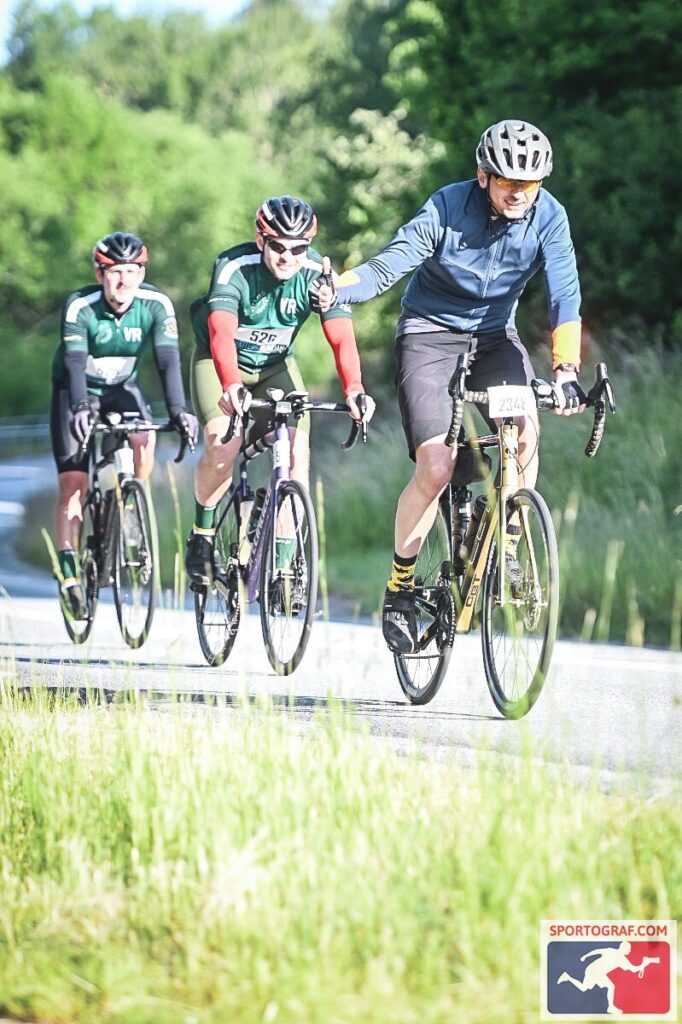
Postanowiłem sobie, że nie zatrzymam się aż się trochę nie ociepli. Bo tak długo jak pedałuję, będę się rozgrzewał. Rowerzystów wciąż było jak na lekarstwo, ale znalazłem jednego, którego tempo było w sam raz, zarówno po płaskim, pod górę jak i na zjazdach. Przejechaliśmy razem dobre 40 km. Nie zjechał na 204 kilometrze, a ja nie chcąc go stracić i w obawie o to, że znów zmarznę – jechałem dalej za nim.
En: I made a decision: I wouldn’t stop again until it got a bit warmer. As long as I was pedaling, I could keep my body warm. There were still very few cyclists around, but I found one whose pace matched mine perfectly – on the flats, uphill, and even on the descents. We ended up riding together for a solid 40 kilometers. He didn’t stop at the 204-kilometer depot, and not wanting to lose him – or risk getting cold again – I chose to keep going and stay on his wheel.
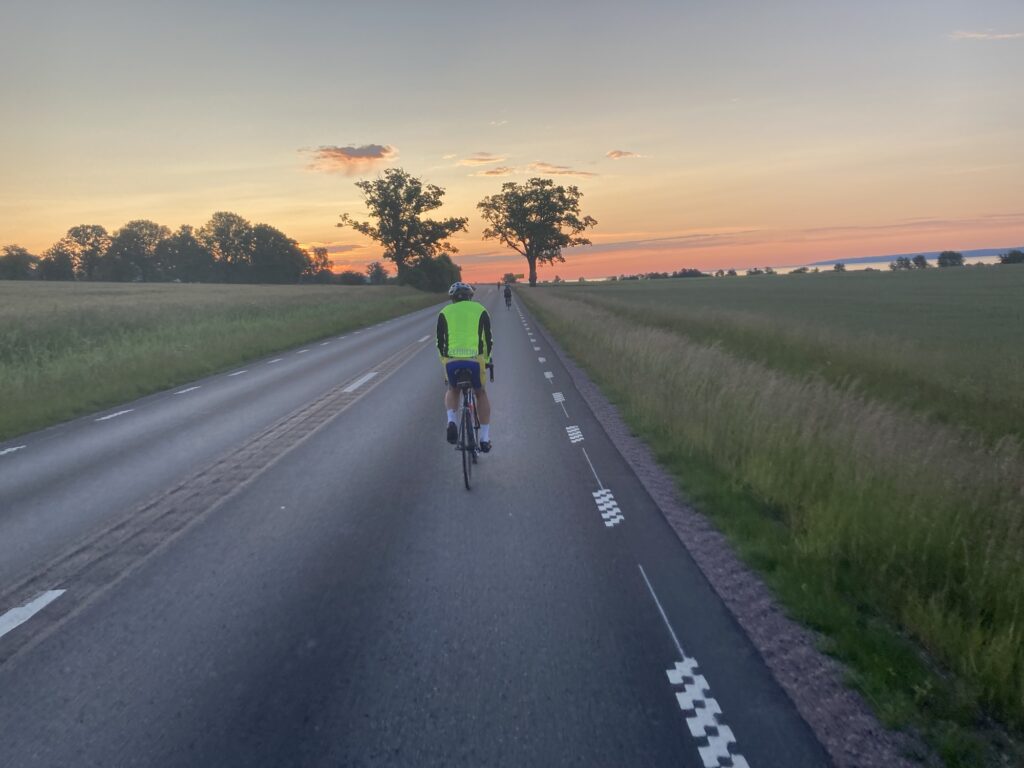
Na 170 kilometrze miałem kryzys zmęczeniowy. To taki objaw, który występuje u mnie na dłuższych wyprawach. Sygnały bólu i zmęczenia z ciała zaczynają być na tyle silne, że mózg zaczyna odmawiać współpracy. To trochę jak rozmowa ze sobą samym, gdzie jednocześnie mówisz „nie dam rady, muszę się zatrzymać, przespać, zakończyć, wrócić do domu, wziąć prysznic i zjeść coś dobrego”, a z drugiej „nie możesz teraz przestać, przejechałeś już tak dużo, zostało jeszcze tylko…”. No właśnie, w moich poprzednich wyprawach to ostatnie może by i działało, kiedy do celu zostało 30, 40, 50 kilometrów. Ale tutaj do celu było 150 kilometrów. Na szczęście miałem mojego nieświadomego sytuacji towarzysza, na którym mogłem skupić swoją uwagę i zignorować protesty. Wiedziałem, że taki kryzys przechodzi. Trzeba tylko wytrwać i nie poddać się.
En: At the 170-kilometer mark, I hit a wall -a wave of exhaustion I’ve come to recognize from longer rides. It’s that moment when the signals of pain and fatigue from your body become so overwhelming that your brain starts to shut down cooperation. It’s like having a conversation with yourself where one part is saying, “I can’t do this anymore, I need to stop, take a nap, end this, go home, shower, and eat something good,” while the other insists, “You can’t quit now, you’ve come so far – there’s just a bit more to go…” In past trips, that last argument might have worked when the finish line was 30, 40, maybe 50 kilometers away. But here, I still had 150 kilometers to go. Luckily, I had my unaware companion up ahead, someone I could focus on instead of the internal struggle. I knew from experience that this kind of mental crisis passes. You just have to hang in there and not give in.
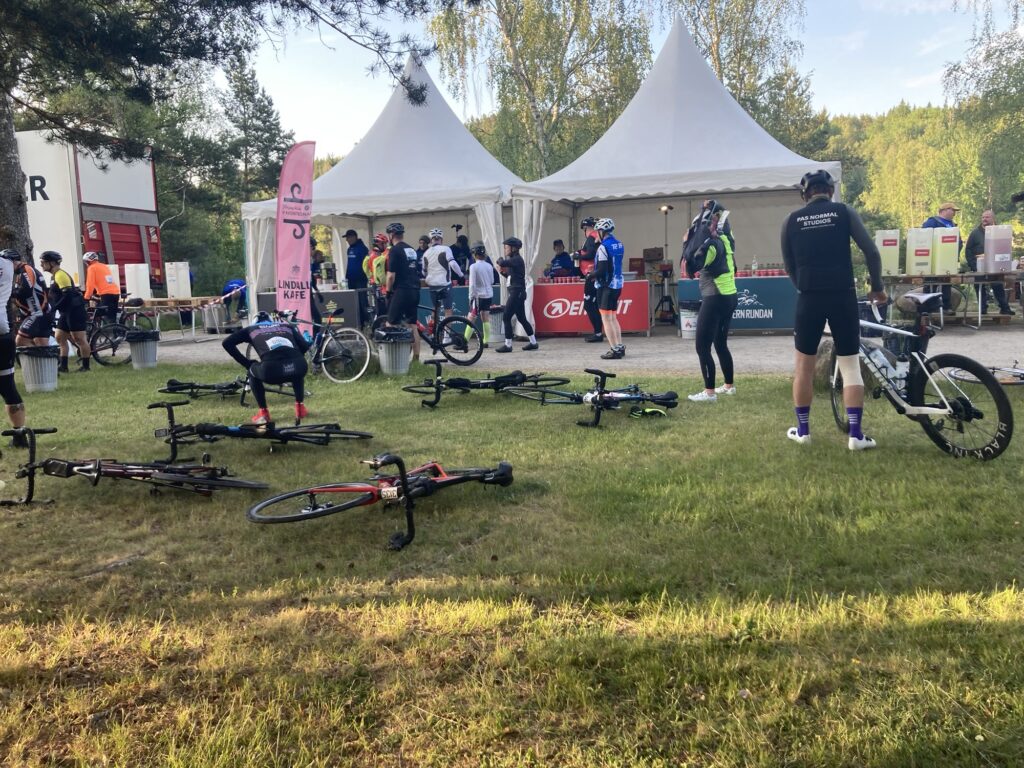
Zjechaliśmy obaj na 225 kilometrze w miejscowości Boviken. Mój towarzysz był dużo szybszy w konsumpcji słodkich bułeczek i wystartował przede mną. Zorientowałem się kiedy już go nie było. Pognałem do roweru i zacząłem pościg, co było sporym błędem. Przy takim poziomie zmęczenia to nie mogło się skończyć niczym dobrym. Samotne tempo mam znacznie wyższe i mniej równe niż kiedy jadę w grupie, co może wydawać się dobre na krótką metę, ale nie na tak długiej trasie i przy takim poziomie zmęczenia. Postanowiłem sobie za cel, że go dogonię. Co w końcu się udało po jakichś 10 kilometrach, ale zaraz jak to się stało miałem kolejny kryzys. Tym razem poczułem też brak energii w mięśniach. Potrzebowałem zastrzyku energii. Sięgnąłem po słodki baton proteinowy. Pomogło na chwilę, ale przed kolejnym depotem znów mnie dopadło. Zmęczenie, brak energii. Mój towarzysz nie zjechał, ale ja musiałem się zatrzymać. Więcej nie było nam dane jechać razem.
En: We both stopped at the 225-kilometer mark in the town of Boviken. My companion was much quicker when it came to devouring sweet buns and got back on the road before me. I only realized he was gone when it was already too late. I rushed to my bike and gave chase – a big mistake. At that level of exhaustion, that kind of move was bound to backfire. When I’m riding solo, my pace tends to be higher but also much more uneven, which might seem effective over short distances – but on a route this long, and in that state of fatigue, it’s not sustainable. I set myself the goal of catching up to him, and after about 10 kilometers, I actually did. But as soon as I did, I hit another wall. This time, it wasn’t just mental – I could feel the energy draining from my muscles. I needed a boost. I reached for a sweet protein bar. It helped briefly, but before I could get to the next depot, the fatigue hit me again. My companion didn’t stop – but I had to. That was the last stretch we’d ride together.
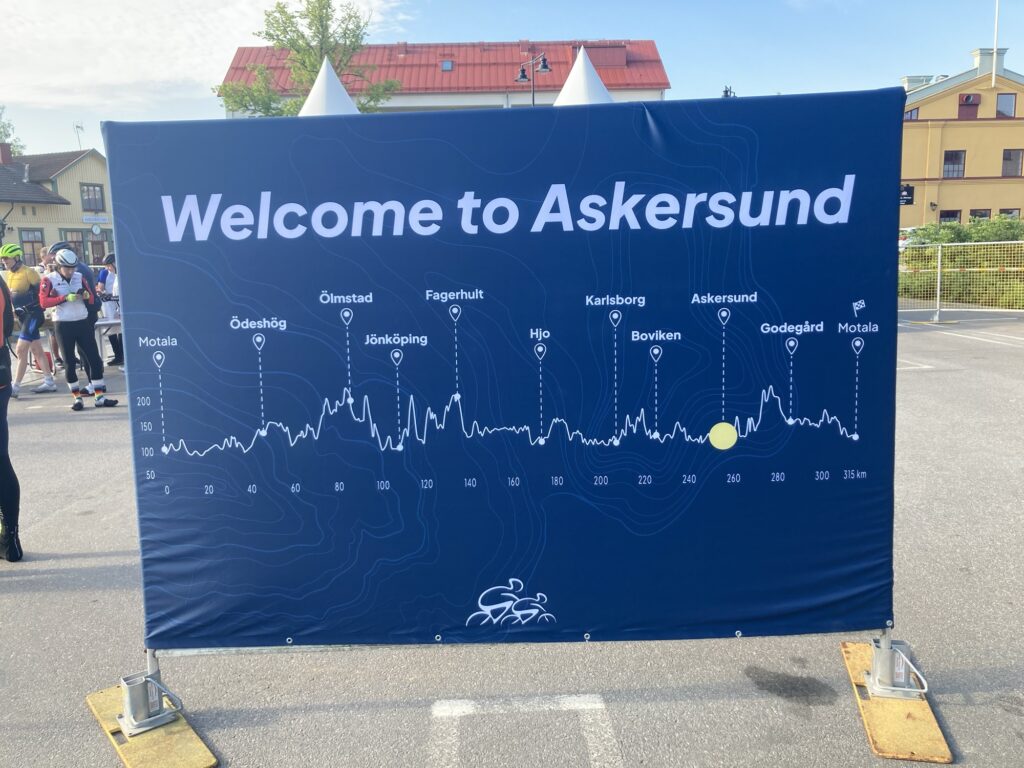
Depot w Askersund był na 256 kilometrze. Uzupełniłem zapas cukru i dałem nogom chwilę odpocząć. Zacząłem też odczuwać ból w dłoni, skóra stała się tkliwa do tego stopnia, że niemożliwe było trzymanie jej na kierownicy. Nauczony doświadczeniem poszedłem do punktu medycznego. Pan nie mówił po angielsku, ale popatrzył, pokiwał głową dając do zrozumienia „aha, tak, to dość powszechne, zaraz coś zaradzimy”. Po czym zmieszał ze sobą jakieś maści, a gotową miksturę wtarł w skórę bolącej dłoni. Ja nie wiem skąd oni biorą tych cudotwórców, ale znów mogłem trzymać obie dłonie na kierownicy.
En: The depot in Askersund was at the 256-kilometer mark. I replenished my sugar levels and gave my legs a moment to rest. That’s when I started feeling pain in one of my hands – the skin had become so sensitive that holding it on the handlebars was nearly impossible. Drawing from earlier experience, I went straight to the medical station. The man there didn’t speak English, but he looked at my hand, nodded knowingly, as if to say, “Ah, yes, this is common – we’ll sort it out.” Then he mixed together some ointments and rubbed the resulting concoction into the sore skin on my hand. I honestly don’t know where they find these miracle workers, but once again – I was able to grip the handlebars with both hands.
Ruszyłem z dość wolną grupą, która przy każdym podjeździe zmniejszała prędkość do kilkunastu kilometrów na godzinę. Doceniłem elektryczne przerzutki w moim rowerze. Przy takim poziomie zmęczenia i odrętwienia dłoni siłowanie się z manetkami zmiany biegu byłoby uciążliwe. Tu wystarczyło lekkie wciśnięcie przycisku i od razu odzywał się miły dla ucha dźwięk zmiany położenia zębatki prowadzącej. Po jakimś czasie miałem dość wolniejszej jazdy, więc przyspieszyłem żeby wejść na nieco wyższe tempo. Po 20 kilometrach znów mnie dopadło, więc zjechałem na kolejny depot w Godegård.
En: I set off again with a rather slow group that dropped its pace to just over a dozen kilometers per hour on every uphill stretch. That’s when I truly appreciated the electronic shifters on my bike. At this level of exhaustion and with numb hands, wrestling with traditional gear levers would’ve been a real struggle. Here, all it took was a gentle press of a button, followed by the pleasant, reassuring sound of the derailleur shifting gears. After a while, I grew impatient with the slower pace and decided to speed up, aiming for a slightly higher tempo. But after 20 kilometers, the fatigue caught up with me again. I pulled into the next depot in Godegård.
Niespecjalnie miałem pomysł co dalej. Nie mogłem się przecież poddać w takim momencie. Zażyłem swoją porcję słodkich bułek i herbaty z cukrem, ale depot serwował też inne rzeczy, których dotąd nie próbowałem. Zerknąłem co jedzą inni rowerzyści. Zauważyłem, że sporą popularnością cieszą się papierowe kubeczki z porcją czipsów ziemniaczanych i kiszonych ogórków. Jest to ostatnia rzecz, o której bym wtedy pomyślał, ale tonący brzytwy się chwyta. Zgarnąłem dwa kubki, popiłem kubkiem herbaty z cukrem i ruszyłem. I to było niesamowite.
En: I didn’t really know what to do next. I couldn’t let myself give up – not at this point. I had my usual fix of sweet buns and tea with sugar, but the depot was also offering other things I hadn’t tried yet. I looked around to see what the other cyclists were eating. To my surprise, there was a lot of interest in paper cups filled with potato chips and pickles. That would’ve been the last thing on my mind in that moment – but hey, desperate times call for desperate measures. I grabbed two cups, washed them down with some sugary tea, and got back on the bike. And it was amazing.
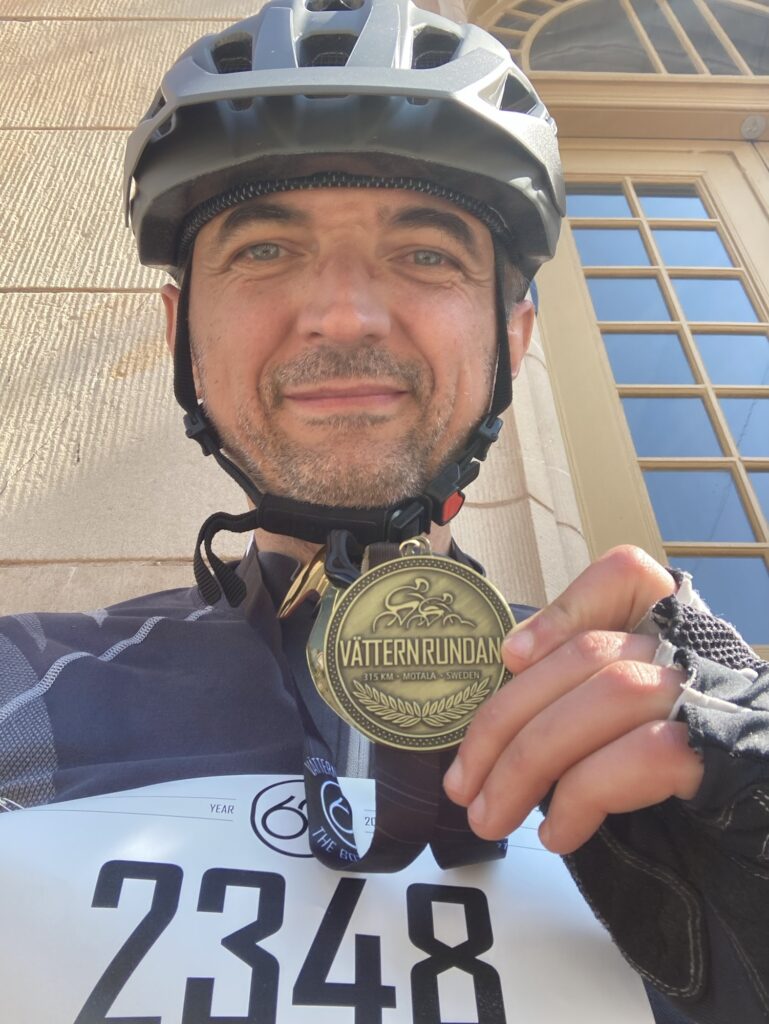
Pierwsze kilometry były normalne, taki rozruch po postoju. Ale potem dostałem takiego kopa że niezależnie od stopnia nachylenia nogi parły do przodu jak przecinaki. I teraz nie wiem czy to były te czipsy z ogórkami, to że to był ostatni odcinek, czy to że w końcu mogłem zdjąć bluzę i znów poczuć ciepło słońca na zmarzniętej skórze. Faktem jest, że jechało mi się znakomicie, bez żadnych kryzysów. Wyprzedziłem kilkudziesięciu rowerzystów po drodze, dojechałem do Motali gdzie powitali mnie wiwatujący fani, a za linią mety wręczono mi medal ukończenia wyścigu, wegański burger i puszkę bezalkoholowego Carlsberga. Lepszego zwieńczenia wyprawy nie mogłem sobie wymyślić.
En: The first few kilometers felt pretty normal – just the usual warm-up after a stop. But then, suddenly, I got a surge of energy. No matter the incline, my legs were charging forward like pistons. And now I honestly don’t know if it was the chips and pickles, the fact that it was the final stretch, or simply that I was finally able to take off my cycling layer and feel the warmth of the sun on my frozen skin again. Whatever it was, I felt amazing. No more energy crashes, no more crises. I passed dozens of cyclists along the way, rolled into Motala to the cheers of fans, and just past the finish line, I was handed a finisher’s medal, a vegan burger, and a can of non-alcoholic Carlsberg. I couldn’t have imagined a better way to end this journey.
Szkoda że nie mogłem ci tego opowiedzieć osobiście. Wiem, że przeczytałbyś tą relację i potem rozmawialibyśmy o niej wiele razy. Wiem też, że byłbyś ze mnie dumny. Tak jak zawsze byłeś. Brakuje mi ciebie.
En: I wish I could have told you this in person. I know you would have read this story, and we would’ve talked about it again and again. And I know you would have been proud of me – just like you always were. I miss you.