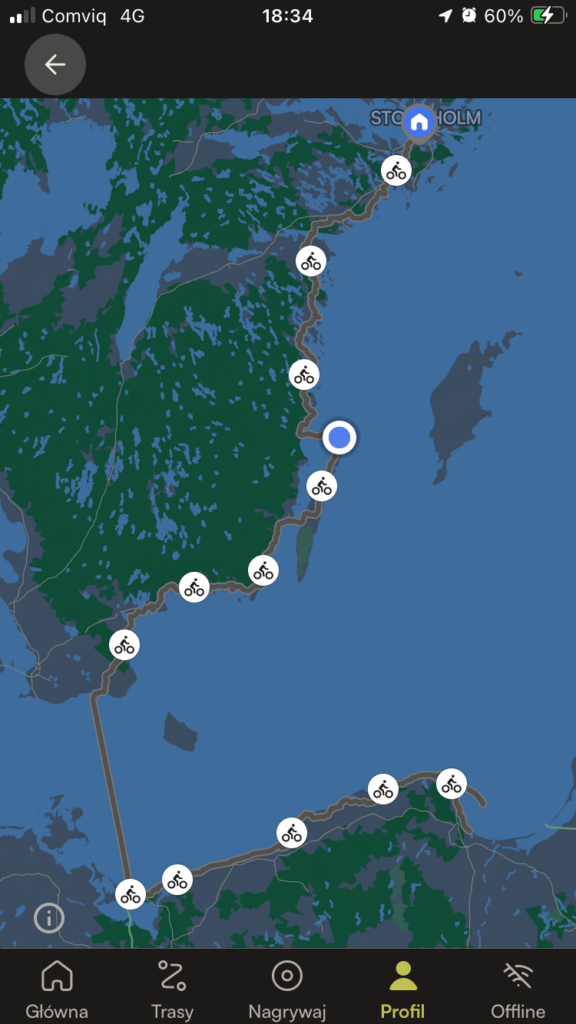
Dojechałem na plażę w rezerwacie Bödakusten västra, gdzie dziś będę nocował. Ale po kolei – najpierw mapa.
EN: I made it to the beach in the Bödakusten Västra Nature Reserve, where I’ll be spending the night. But let’s start from the beginning. First, the map.
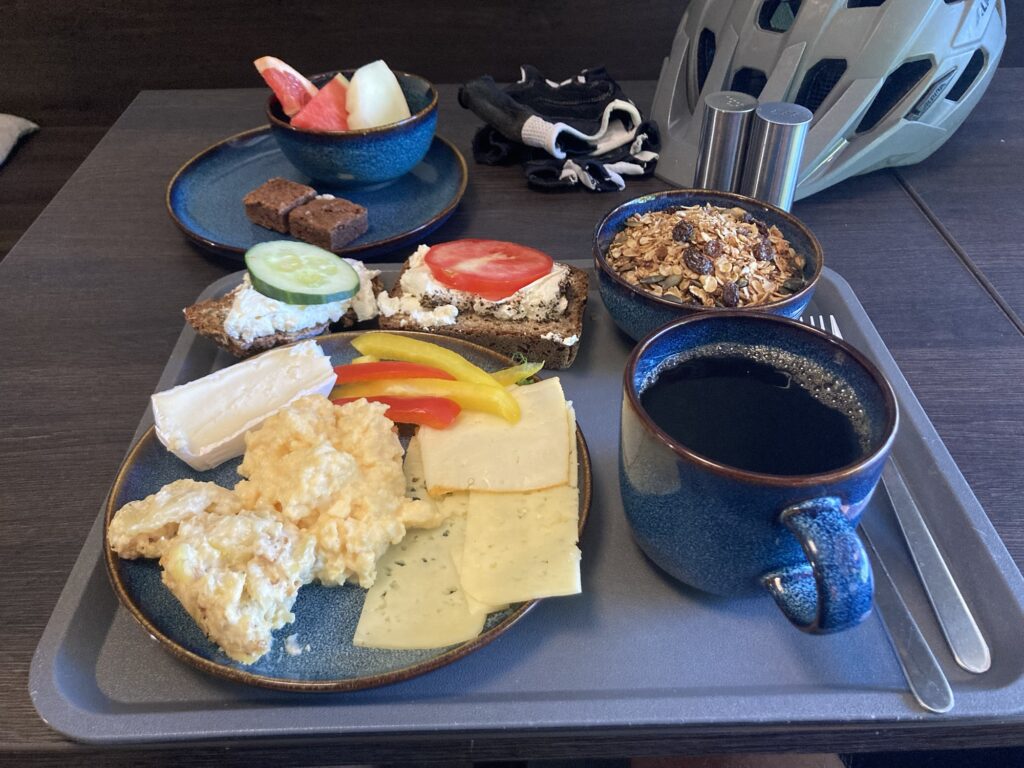
Dzień zaczął się dość wcześnie. Prom na Olandię odpływał z portu o 9:00, a wcześniej musiałem jeszcze zdać pokój i zjeść śniadanie. Wczoraj udało mi się znaleźć kapitalny bufet śniadaniowy w pobliskim hotelu Best Western Sjöfartshotellet, więc długo się nie zastanawiałem i rano znów tam podjechałem.
EN: The day started fairly early. My ferry to Öland was leaving at 9 a.m., so I first had to check out of my room and find some breakfast. Yesterday I discovered an excellent breakfast buffet at the nearby Best Western Sjöfartshotellet, so there was no reason to look elsewhere. I headed back there and started the day with a proper meal.
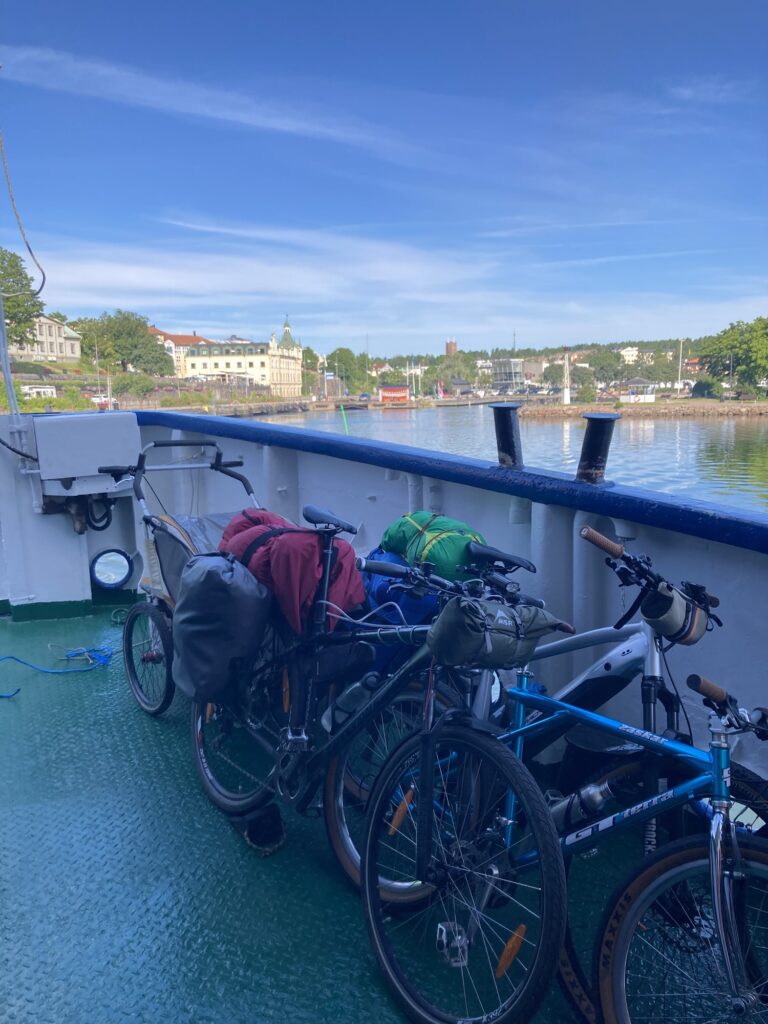
Najedzony ruszyłem na nabrzeże, gdzie formowała się już kolejka na prom do Byxelkrok. Dołączyłem do grupki rowerzystów i pół godziny później wszyscy byliśmy już na pokładzie. Prom odbił od brzegu punktualnie. Pogoda dopisywała – było słonecznie, choć dość wietrznie.
EN: After breakfast I cycled down to the harbor, where a queue for the ferry to Byxelkrok had already formed. I joined a group of fellow cyclists, and about half an hour later we were all on board. The ferry departed right on time. The weather was great: sunny, although quite windy.
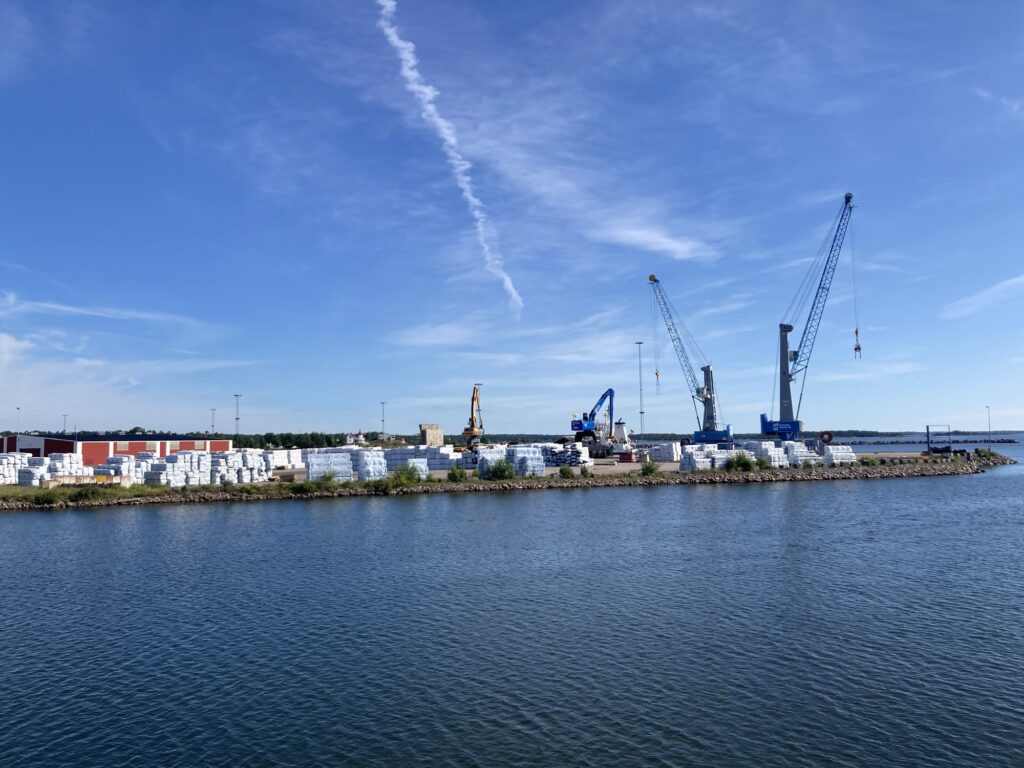
Dopiero z perspektywy promu zdałem sobie sprawę ze skali transportu morskiego, który przechodzi przez Oskarshamn. Co chwilę gdzieś na horyzoncie pojawiał się kolejny statek – promy, masowce i jednostki towarowe. To zdecydowanie jeden z ważniejszych portów na szwedzkim wybrzeżu Bałtyku.
EN: It wasn’t until I was out on the ferry that I realized just how much maritime traffic passes through Oskarshamn. Every few minutes another vessel appeared on the horizon, from ferries to cargo ships and bulk carriers. It’s clearly one of the busiest ports on Sweden’s Baltic coast.
Rejs trwał dwie godziny i minął zaskakująco szybko. Na promie poznałem parę rowerzystów z Holandii, którzy robią pętlę z Malmö przez Göteborg, Söderköping, Olandię, Kalmar i Ystad. Ambitna trasa. Opowiadali, że jeździli już po Francji, Niemczech i Austrii, ale to właśnie Szwecja wydaje im się najbardziej wymagająca ze względu na liczne podjazdy. Fajnie się rozmawiało – ta wyprawa obfituje w spotkania z innymi turystami rowerowymi i chyba właśnie takie przypadkowe rozmowy zostają później w pamięci.
EN: The two-hour crossing went by surprisingly quickly. On board I met a couple from the Netherlands who are cycling a huge loop through Malmö, Gothenburg, Söderköping, Öland, Kalmar and Ystad. Quite an ambitious route. They told me they’ve already toured France, Germany and Austria, yet they find Sweden the most demanding because of its endless rolling hills. We had a great chat. One of the best parts of this trip has been meeting other bicycle travelers along the way.
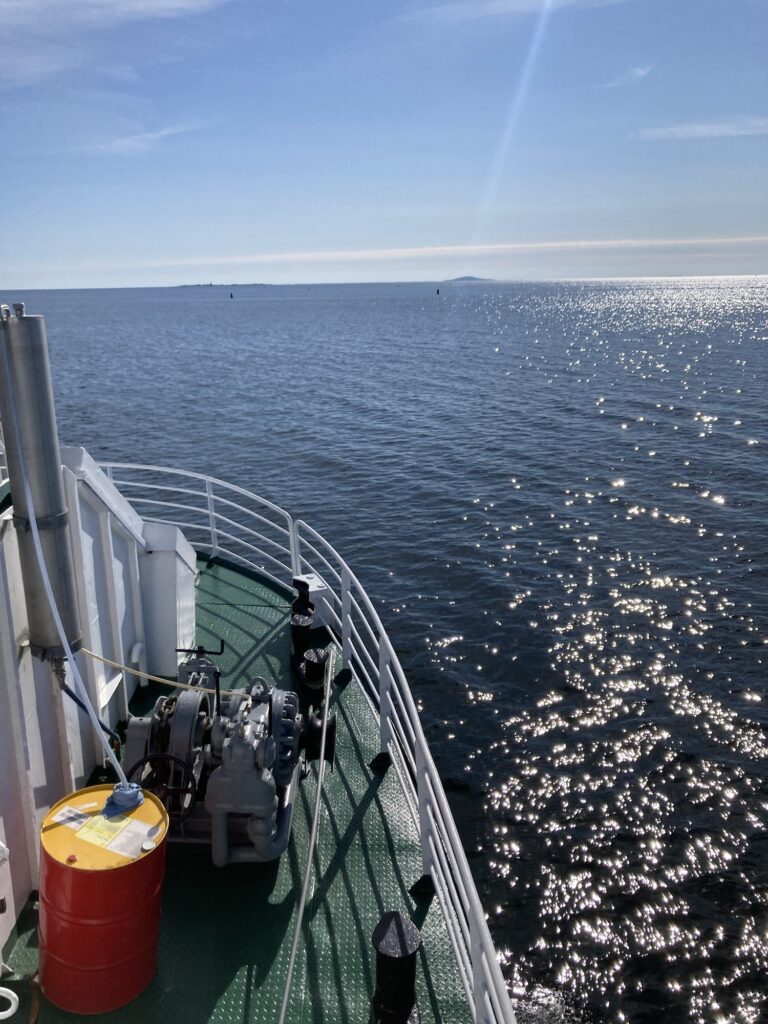
Ponieważ rejs zabrał najlepszą porę na pedałowanie, postanowiłem nie planować dziś długiego etapu i po prostu pozwiedzać okolice. Po dopłynięciu skierowałem się od razu na północ, w stronę latarni morskiej Långe Erik. Droga prowadziła wzdłuż wybrzeża, przy którym rozciąga się rezerwat przyrody Neptuni åkrar.
EN: Since the ferry crossing took up the best riding hours of the day, I decided not to plan a long cycling stage. Instead, I spent the day exploring the area. After arriving on Öland, I headed north toward Långe Erik Lighthouse. The road followed the coastline alongside the Neptuni Åkrar Nature Reserve.
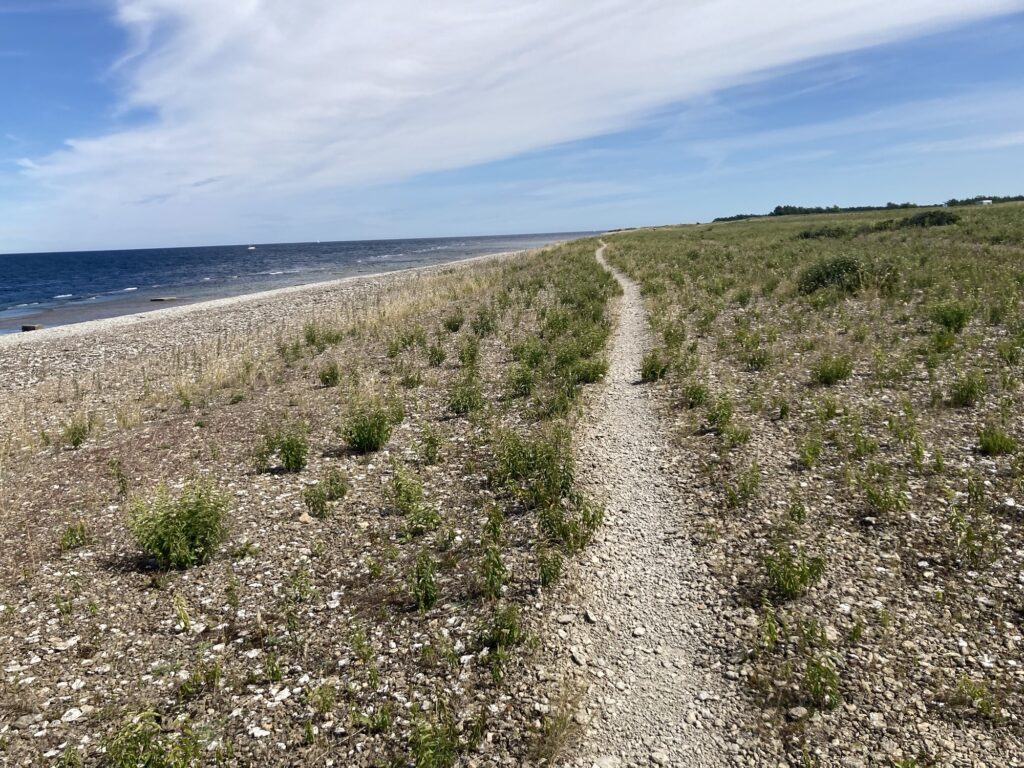
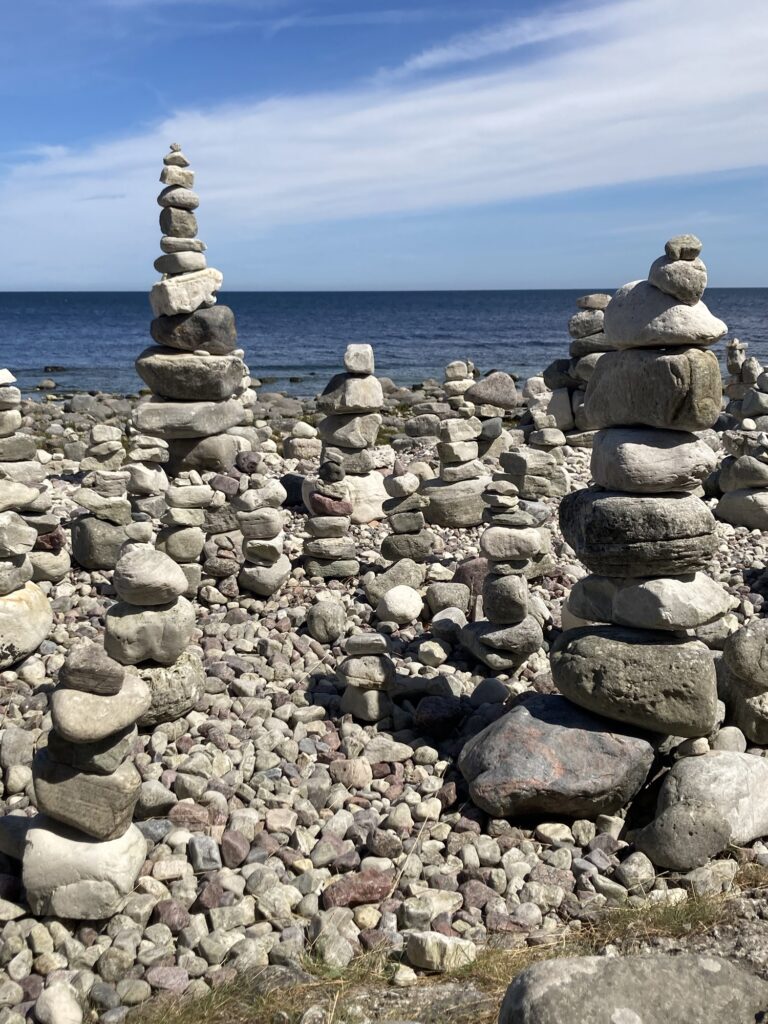
Mimo nazwy oznaczającej „Pola Neptuna”, nie ma tu ani pól, ani upraw. To rozległe kamienne wybrzeże zbudowane z wapiennych otoczaków, które przez tysiące lat były formowane przez fale Bałtyku. Krajobraz jest surowy, ale jednocześnie bardzo charakterystyczny dla północnej Olandii i robi spore wrażenie.
EN: Despite its name, which translates as “Neptune’s Fields,” there are no actual fields here. Instead, the reserve is covered with endless limestone pebbles shaped by Baltic waves over thousands of years. The landscape is rugged, unusual and unmistakably characteristic of northern Öland.
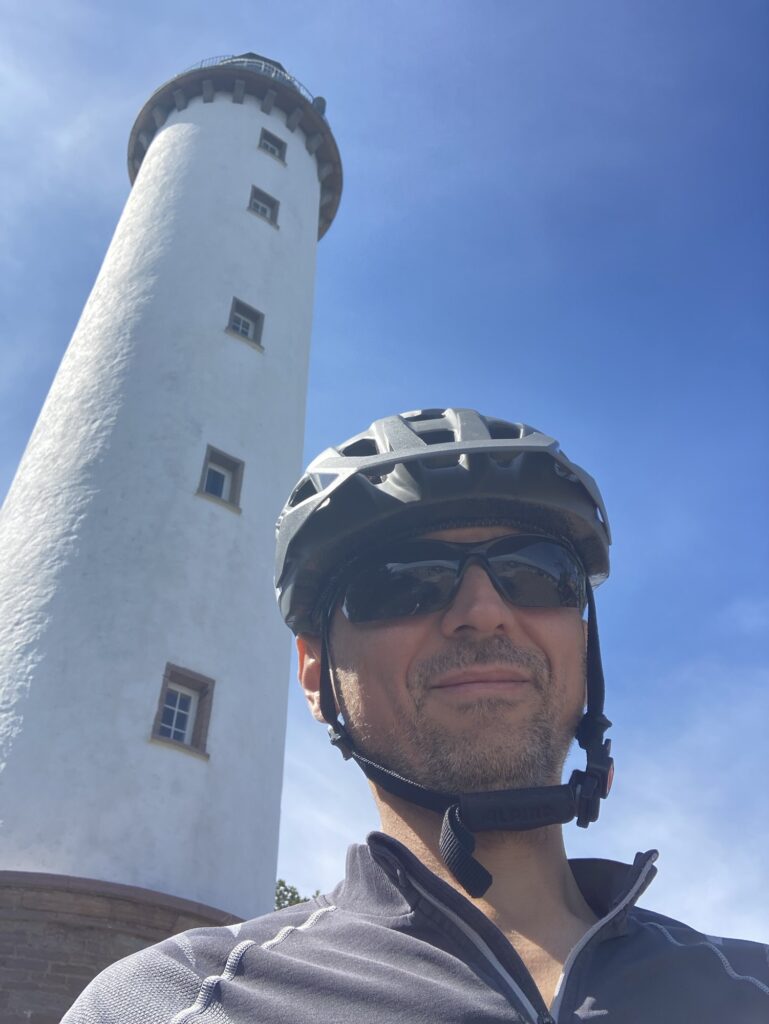
Sama latarnia Långe Erik również zasługuje na uwagę. Powstała w 1845 roku po niemal dwóch stuleciach starań lokalnych mieszkańców i żeglarzy, którzy od dawna domagali się poprawy bezpieczeństwa na tych wodach. Ma 32 metry wysokości i stoi na niewielkim cyplu, z którego rozciąga się świetny widok na Bałtyk oraz pobliskie wysepki. Dziś można wejść na jej szczyt, choć ja bardziej niż samą latarnię zapamiętam otaczający ją krajobraz.
EN: Långe Erik Lighthouse is well worth a visit. It was completed in 1845 after almost two centuries of requests from local residents and sailors who wanted safer navigation in these waters. Standing 32 meters tall on a narrow peninsula, it offers beautiful views of the Baltic Sea and the nearby islands. As impressive as the lighthouse is, it was the surrounding scenery that stayed with me the most.
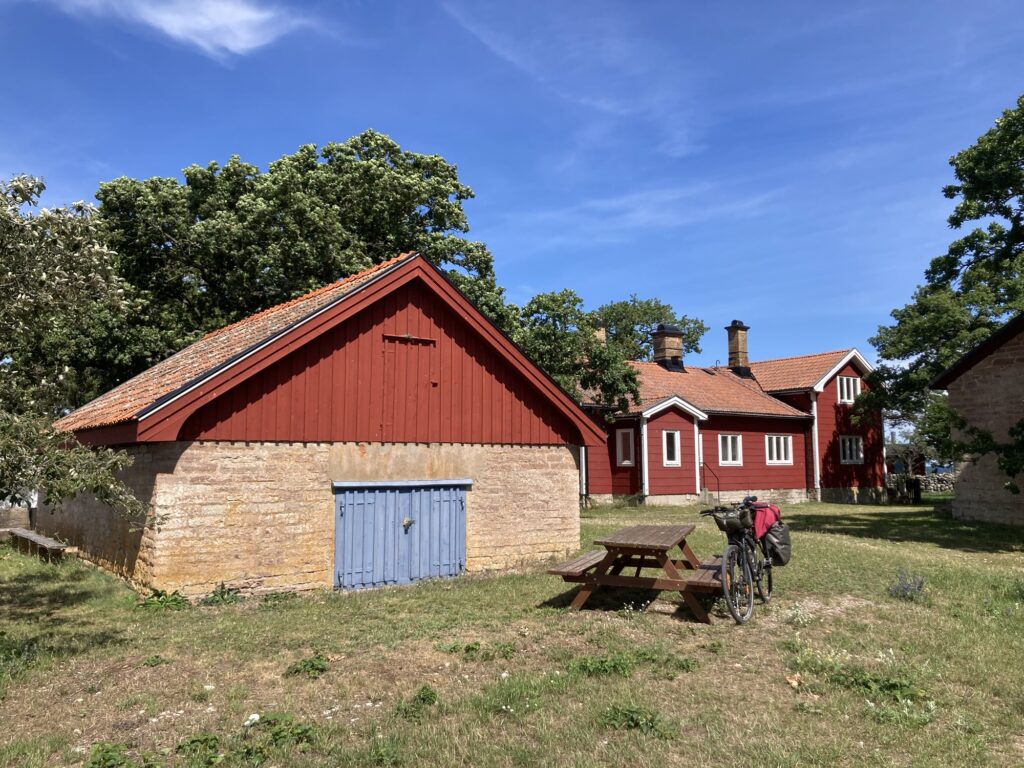
Miejsce było jednak dość zatłoczone, co w szczycie sezonu nie powinno dziwić. Duży parking, kawiarnia, sklep z pamiątkami i atrakcje dla dzieci skutecznie przyciągają turystów, dlatego nie zabawiłem tam długo. Ruszyłem na poszukiwanie lasu trolli.
EN: The area was quite busy, which wasn’t surprising in the middle of summer. A large parking lot, a café, a souvenir shop and attractions for children make it one of the island’s most popular stops. I didn’t stay for long and soon set off in search of the famous Troll Forest.
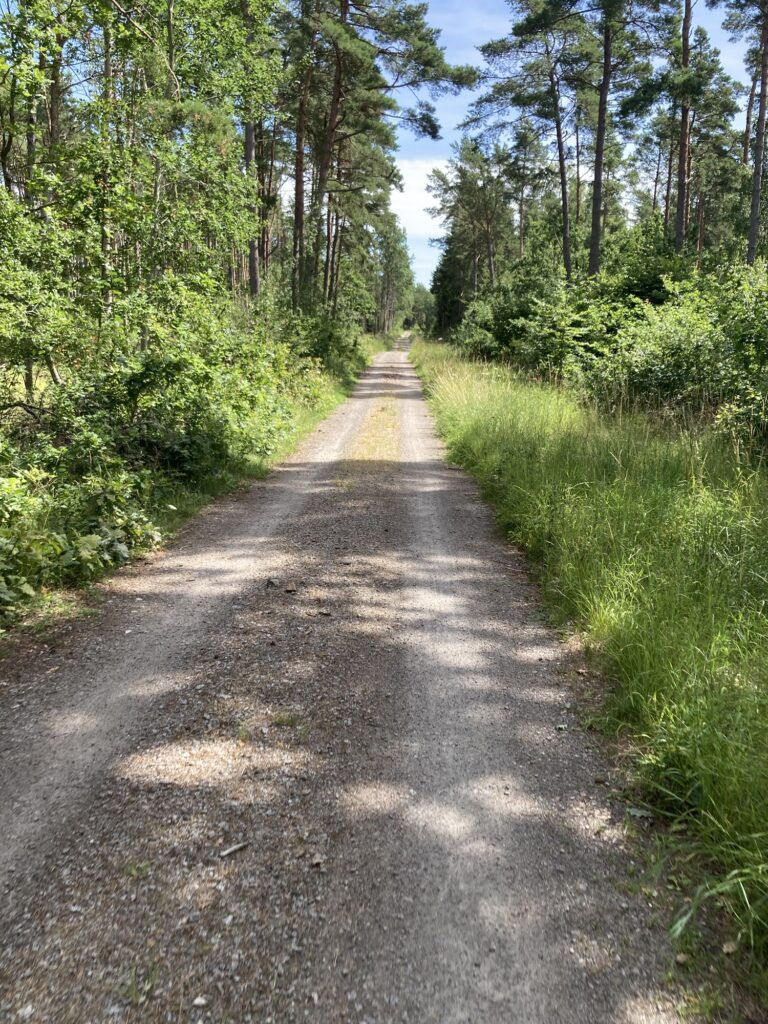
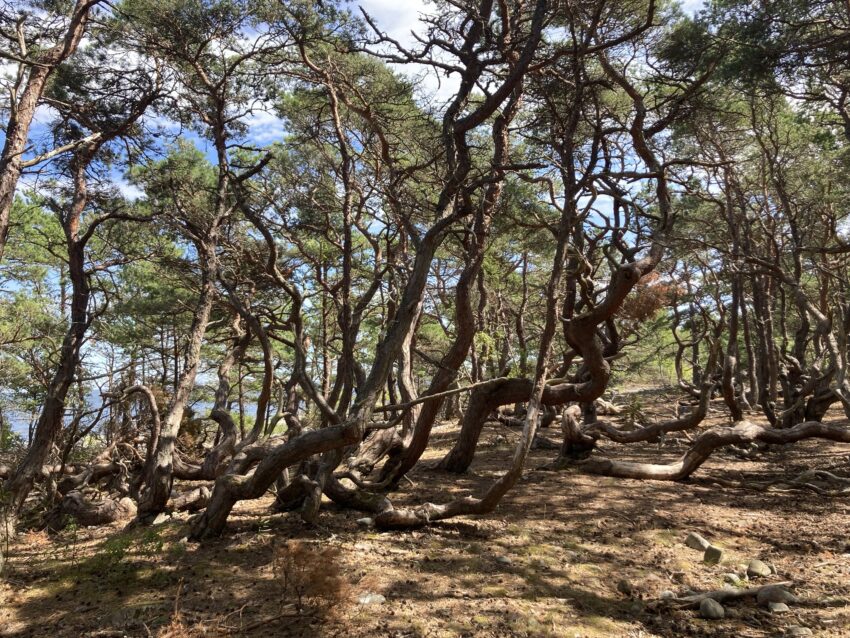
Trollskogen, czyli Las Trolli, leży po drugiej stronie zatoki Grankullaviken. Przeszedłem czerwonym szlakiem, żeby przekonać się, co kryje w sobie to tajemnicze miejsce. Największe wrażenie robią tu sosny o fantazyjnie powyginanych pniach. Przez dziesiątki, a nawet setki lat były kształtowane przez silne nadmorskie wiatry i trudne warunki, przez co wyglądają, jakby ktoś celowo nadał im te niezwykłe kształty. Nietrudno zrozumieć, skąd wzięła się nazwa lasu.
EN: Trollskogen, or the Troll Forest, lies on the opposite side of Grankullaviken Bay. I followed the red hiking trail to see what makes this place so special. The first thing that catches your eye is the twisted pine trees. Decades of strong coastal winds and harsh growing conditions have bent and shaped them into strange, almost magical forms. It’s easy to see why people gave this forest its name.
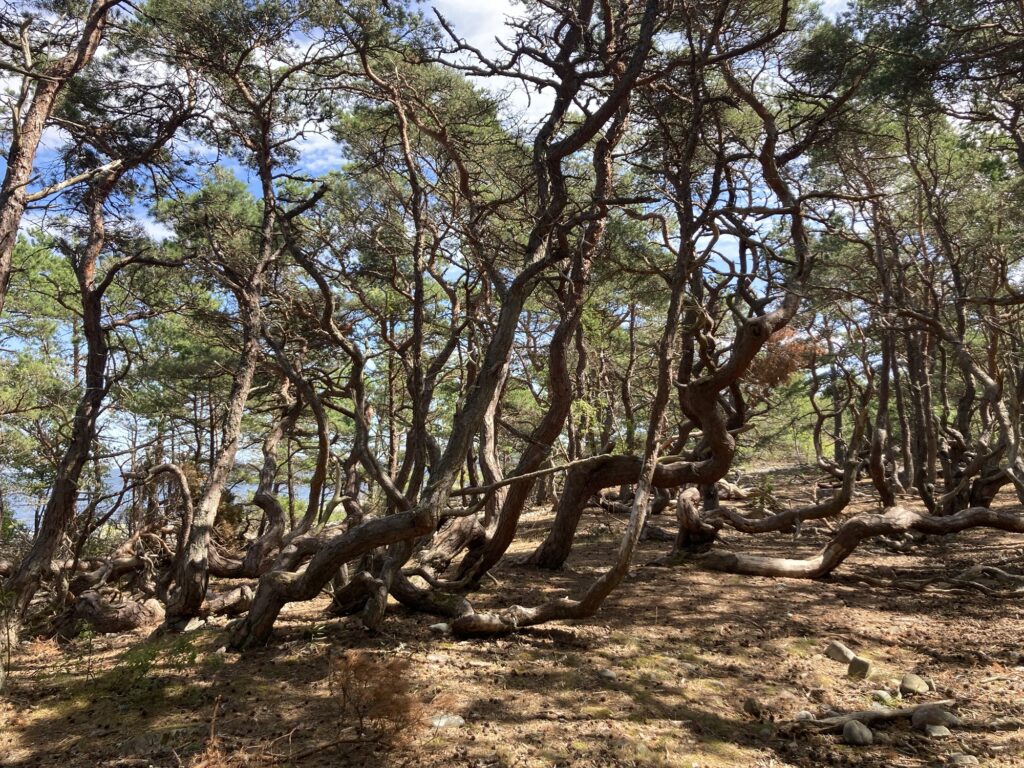
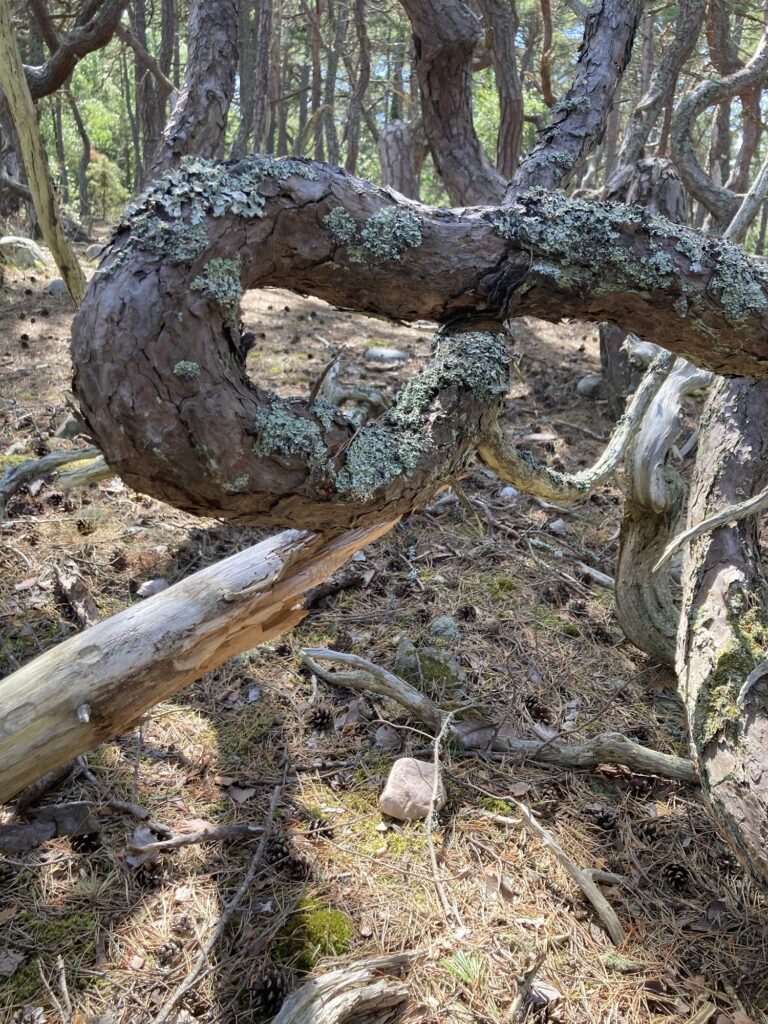
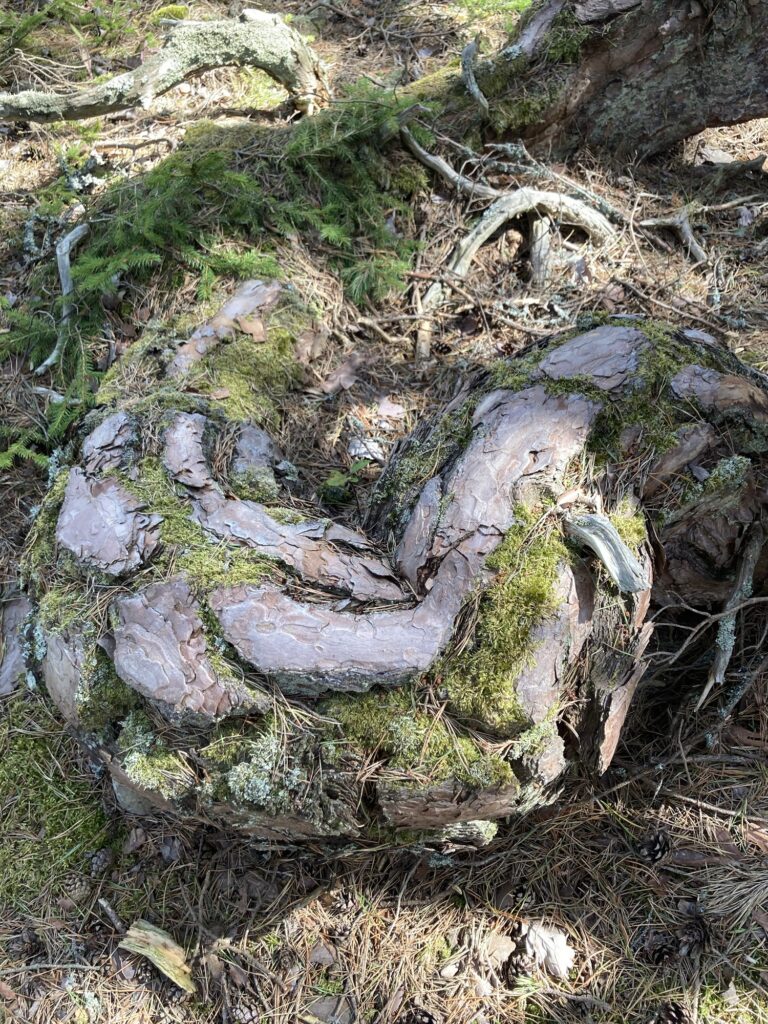
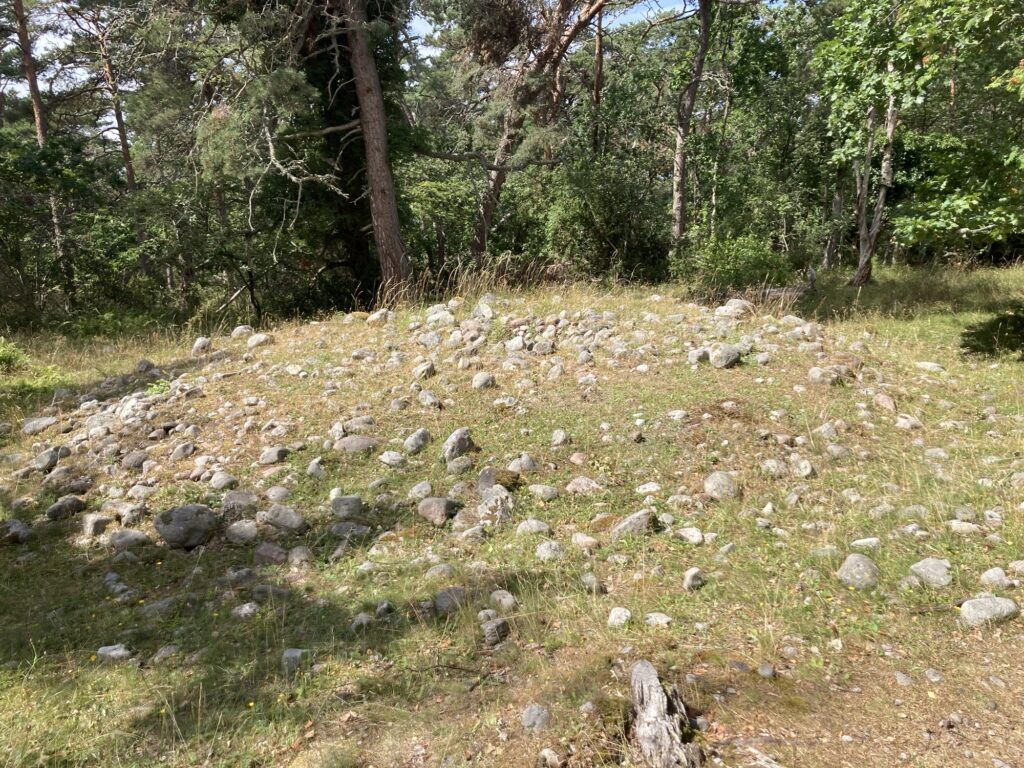
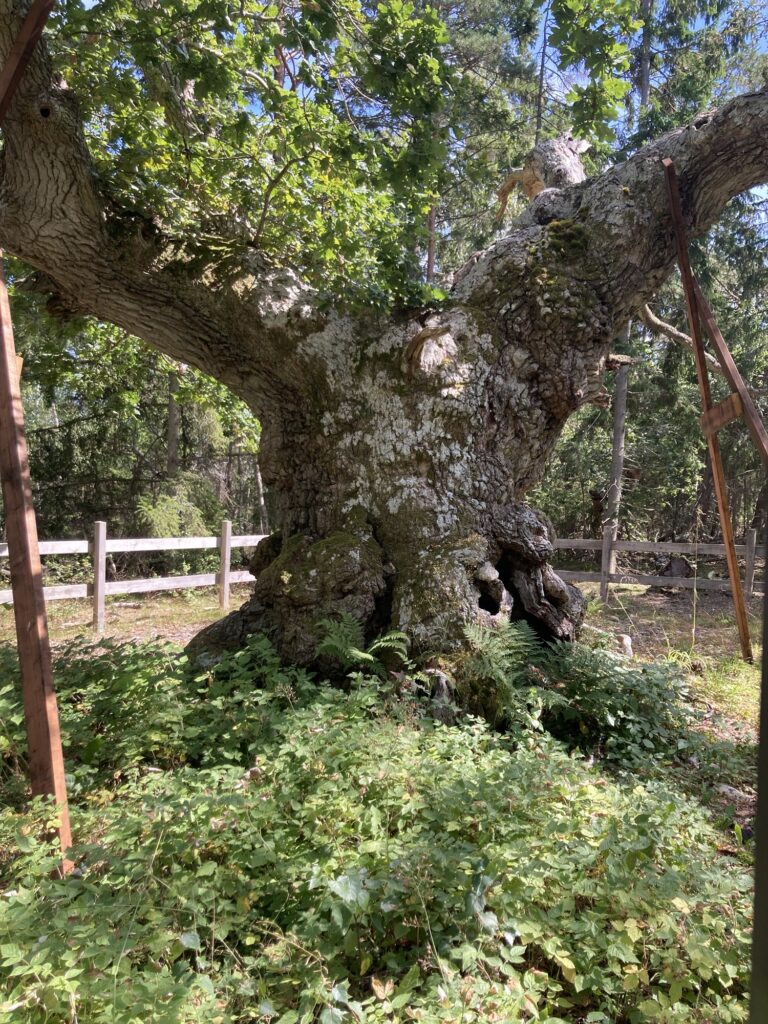
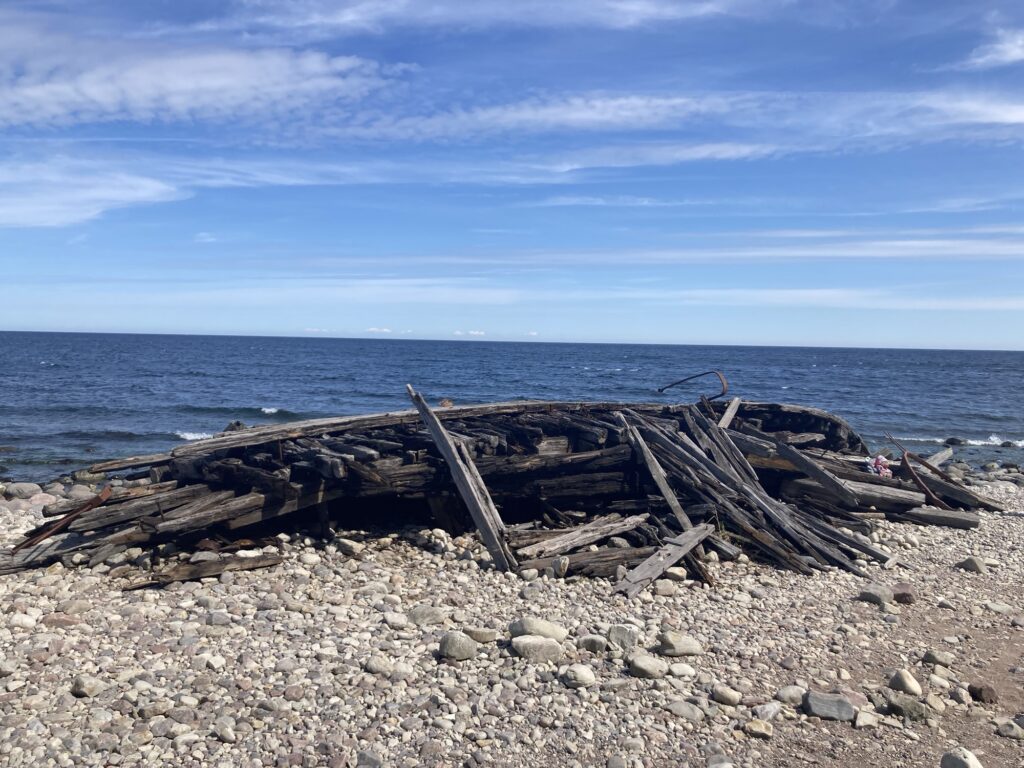
Po drodze można natknąć się także na stare miejsca pochówku z epoki żelaza, ogromny liczący kilkaset lat dąb oraz pozostałości wraku szkunera Swiks, który osiadł na mieliźnie podczas sztormu w 1926 roku. Dzięki takim detalom spacer nie jest tylko przechadzką po lesie, ale podróżą przez historię tego zakątka Olandii.
EN: Along the trail you’ll also come across Iron Age burial sites, a centuries-old oak tree and the remains of the schooner Swiks, which ran aground during a storm in 1926. These details turn an ordinary forest walk into a journey through the natural and cultural history of northern Öland.
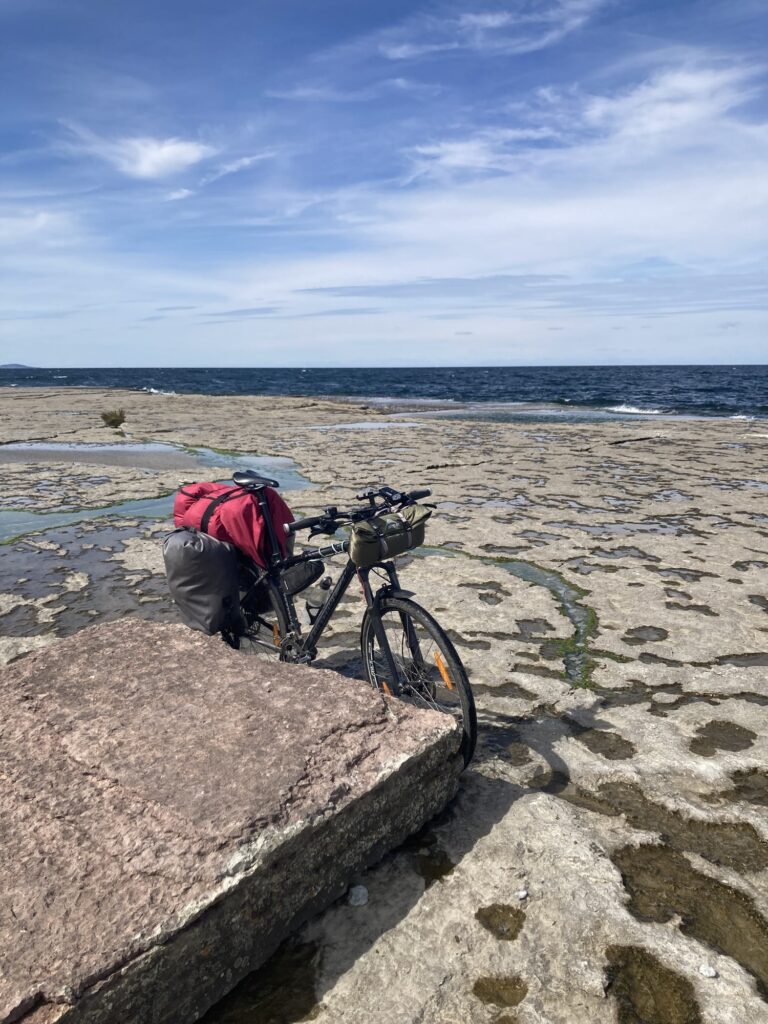
Ostatni dzisiejszy etap prowadził do rezerwatu Bödakusten västra, gdzie dozwolone jest biwakowanie na plaży przez jedną dobę. Na miejscu szybko okazało się, że wiatr jest tak silny, iż rozbicie namiotu będzie większym wyzwaniem niż cały dzisiejszy dystans. Przez chwilę wyglądało to dość beznadziejnie, ale po dłuższych poszukiwaniach znalazłem w końcu nieco bardziej osłonięte miejsce i udało się postawić namiot.
EN: My final destination for the day was the Bödakusten Västra Nature Reserve, where camping on the beach is allowed for one night. As soon as I arrived, I realized the wind would be a bigger challenge than the day’s ride. For a while it seemed almost impossible to pitch the tent, but after searching around I finally found a more sheltered spot and managed to get it up.
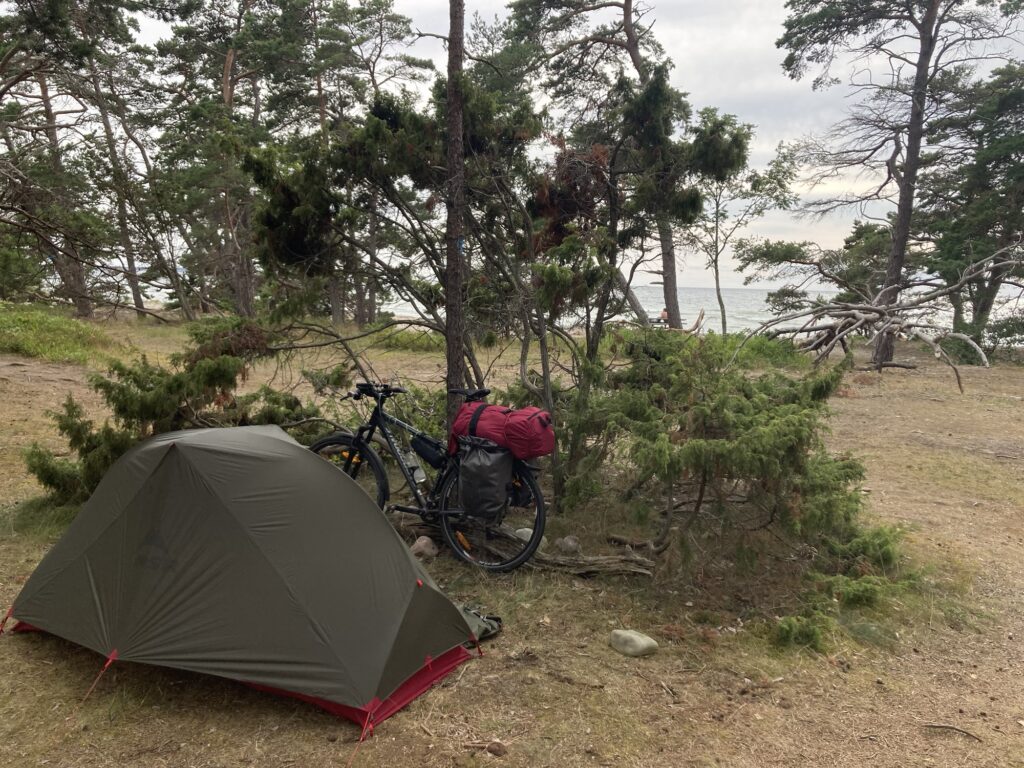
Teraz powinienem już szykować się do spania, ale zamiast tego siedzę na plaży, patrzę na morze i słucham szumu fal. Czasami właśnie takie chwile, kiedy nie dzieje się zupełnie nic, są najlepszą częścią całej podróży.
EN: I should probably be getting ready for bed by now. Instead, I’m sitting on the beach, staring out at the sea and listening to the sound of the waves. Sometimes these quiet moments, when nothing at all is happening, become the most memorable part of the journey.